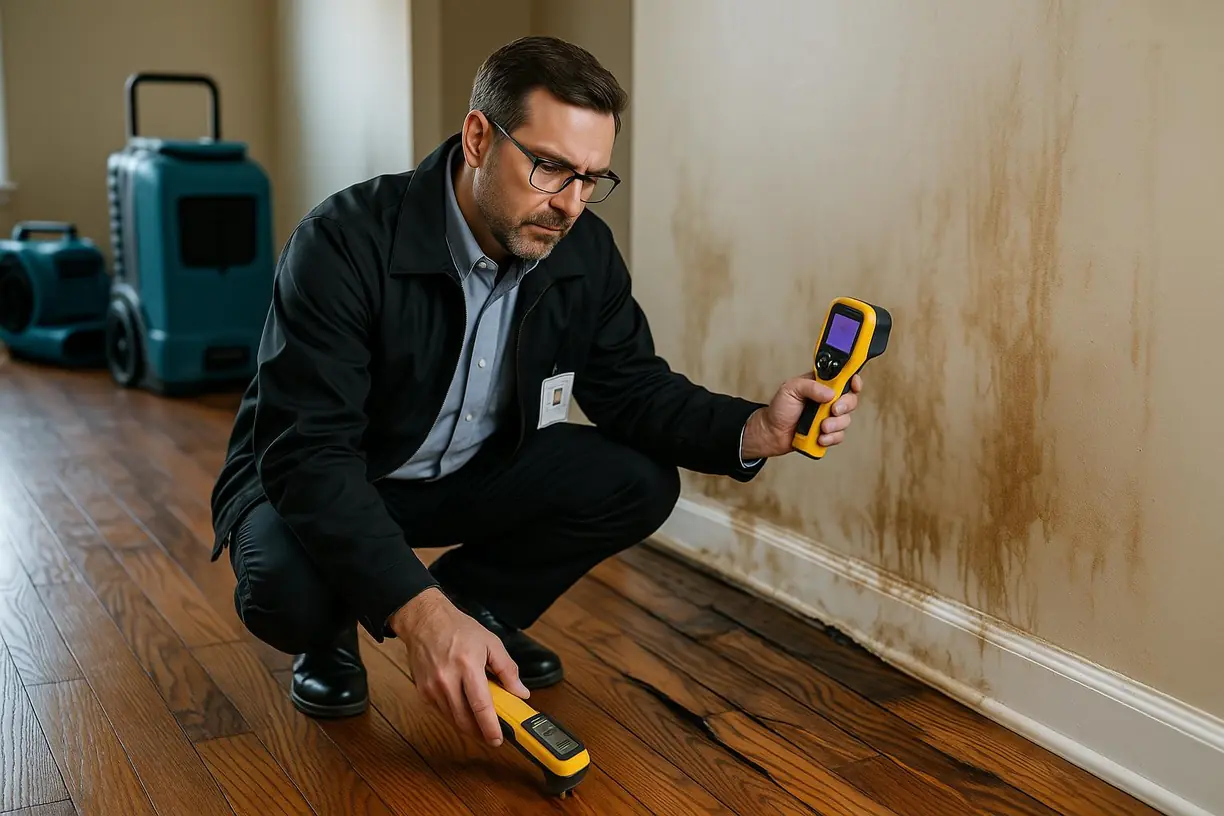
Water Damage Requires Two Calls - Your Mitigation Company and Your Public Adjuster
Fast mitigation protects your property. A public adjuster protects your finances. Call both at the same time.
How Mitigation Companies and Public Adjusters Can Help
When water damage hits your home, time is critical. A professional water mitigation company extracts standing water, sets up drying equipment, and prevents further damage. This work is essential and should begin as quickly as possible.
At the same time, a licensed public adjuster reviews your insurance policy, identifies potentially applicable coverage, documents damage, and helps manage the claim. This positions the claim so the mitigation work and the full covered cost of restoration are documented and pursued under your policy.
Together, the mitigation company protects your home while the public adjuster protects your claim.
Mitigation Stops the Damage
Water mitigation companies provide emergency extraction, professional drying, and contamination remediation. The faster they start, the less damage your property sustains and the lower the overall cost.
DCS Reviews Your Policy
Not all water events are covered. We review the policy and facts relevant to potential coverage. The insurer evaluates coverage and payment; disputed legal questions require an attorney. Do not delay notice or urgent mitigation while waiting for a review.
We Document the Mitigation Work
We document the full scope of damage, review mitigation invoices, and negotiate the covered mitigation and restoration costs with the insurance company.
Understanding Your Water Damage Coverage
Most homeowners assume that any water damage to their home is covered by insurance. The reality is more complicated. Standard homeowner policies cover sudden and accidental water damage - a burst pipe, an appliance failure, or a water heater rupture.
However, several common water events are not covered by standard policies:
- Surface flooding from storms or rising water (requires a separate flood policy)
- Off-premises sewer or city drainline backups (requires a specific endorsement, unlike an on-premises plumbing failure)
- Gradual leaks that have been ongoing over weeks or months
- Foundation seepage or groundwater intrusion (may require an endorsement, though sometimes covered if caused by a plumbing leak, but these are complex claims)
- Water damage resulting strictly from long-term deferred maintenance (however, sudden and accidental leaks are typically covered even if the plumbing was older)
This is why having a public adjuster review your policy at the same time your mitigation company begins work is so important. We can identify potentially relevant coverage, exclusions and documentation needs. A policy review does not guarantee coverage or payment.
Protecting Yourself Financially
Mitigation contracts typically include a clause making you responsible for payment if insurance does not cover the loss. This is standard practice - mitigation companies perform emergency work and need to be compensated for their services.
By calling DCS at the same time you call your mitigation company, we can review your coverage quickly and let you know where you stand before the bills start adding up.
When coverage is uncertain, a quick policy review helps you make informed decisions before costs accumulate.
The Smart Steps to Take After Water Damage
Here is how to protect both your property and your insurance claim at the same time.
Stop the Water Source
Shut off the water supply when safe. Do not enter hazardous areas; contact emergency services or a qualified professional if needed.
Document Damage When Safe
Photograph water, damaged materials and the source when safe. Do not enter hazardous areas or delay urgent protective work to obtain photos. Keep receipts and follow qualified safety guidance.
Call a Mitigation Company
Call a qualified water mitigation company to begin emergency extraction and drying. Optional: ask a public adjuster or contractor to review the scope.
Report the Claim to Your Insurance Company
Notify your insurer promptly without waiting for a coverage review. Once engaged, DCS can help report and document the claim. Continue cooperating with insurer requests and direct interviews required by the policy or law.
Mitigation and Documentation Work Together
Your mitigation company dries the property and documents the work. DCS documents damage, reviews the mitigation scope and prepares the claim estimate.
DCS Manages the Claim Through Settlement
We prepare the claim estimate, review mitigation and restoration invoices, and negotiate supported claim items with the insurance company.
What Water Mitigation Costs - And How Insurance Covers It
Water mitigation is specialized emergency work that requires professional equipment, trained technicians, and around-the-clock monitoring. Depending on the size of the loss and the category of water, the costs can escalate quickly.
When your claim is properly documented and filed, many policies include reasonable mitigation costs. Check your policy and keep every invoice. DCS documents the mitigation work so the insurer can review it.
If there is any question about coverage, a quick policy review by a licensed public adjuster helps you understand your financial exposure before costs accumulate.
What DCS Does While Your Mitigation Company Works
When you call DCS alongside your mitigation company, here is what happens on our end:
Policy Review
We review the policy, endorsements and available facts to identify potentially applicable coverage, exclusions and documentation needs. The time required depends on the file.
Coverage Review
We review coverage provisions relevant to the documented loss. Coverage and payment remain subject to the policy and investigated facts; disputed legal questions should be reviewed by an attorney.
Mitigation Coordination
We coordinate with your mitigation company so their documentation meets insurance requirements. Thorough documentation is what supports payment of the mitigation invoice under the policy.
Claim Strategy
We develop a claim plan that documents the full scope of the loss. We advise on documentation requirements and ensure nothing falls through the cracks during the emergency response.
Damage Documentation
We use moisture meters and thermal imaging to document hidden moisture that goes beyond what is visible on the surface. This ensures the claim reflects the true scope of damage.
Full Claim Management
From policy review through final settlement, we manage every aspect of your water damage insurance claim. You focus on your family. We focus on your claim.
What Is and Is Not Covered: Common Water Damage Scenarios
Typically Covered
- Burst pipe due to sudden failure
- Water heater rupture
- Appliance malfunction (washing machine, dishwasher)
- Accidental overflow on premises (bathtub, sink, or clogged toilet)
- Ice dam damage to interior
- Fire suppression system discharge
- Roof leak from storm damage (wind-driven rain)
Commonly Excluded
- Surface flooding (requires separate flood policy)
- Municipal sewer or city drainline backup (requires a specific endorsement)
- Gradual leak that has been occurring over time
- Foundation seepage or groundwater intrusion (may require an endorsement, though sometimes covered if resulting from a covered plumbing failure, but these are complex claims)
- Maintenance-related failures (unless the failure results in a sudden and accidental break or leak, which is typically covered)
- Mold from long-term humidity (not sudden water event)
- Water damage during vacancy exceeding policy limits
Not sure if your water damage is covered?
Call us for a free, no-obligation policy review. We will walk you through what your policy does and does not cover - often while your mitigation team is already on the way.
833-4UR-LOSS - Free Policy ReviewWhy Policyholders Trust DCS PIA With Water Damage Claims
DCS personnel include former carrier field adjusters with carrier-side claims handling experience from 2010 to 2017. We know exactly how water damage claims are evaluated, scoped, and settled from the inside.
We use professional moisture meters and thermal imaging on every water damage inspection to document hidden moisture that insurance adjusters miss.
We work with trusted mitigation companies across our network and coordinate with them to ensure proper documentation that supports your claim.
We review every mitigation invoice line by line and advocate for payment of all covered drying and remediation costs under the policy.
Licensed in both Texas and Florida - two states where water damage claims are among the most common and most frequently disputed.
No recovery, no fee. If we do not recover additional funds, you owe us nothing.
Frequently Asked Questions
What is the difference between water mitigation and water restoration?
Can I choose my own water mitigation company?
What happens if my insurance claim is denied after mitigation has already started?
How much does water mitigation typically cost?
Why do water mitigation companies respond so quickly?
Does homeowner insurance always cover water damage?
How can a public adjuster help with my water damage claim?
What should I do first when I discover water damage?
Water Damage? Make Two Calls.
Call your mitigation company to protect your property. Call DCS to protect your claim. We work together to get you back to normal - and to document your loss. No recovery, no fee.
