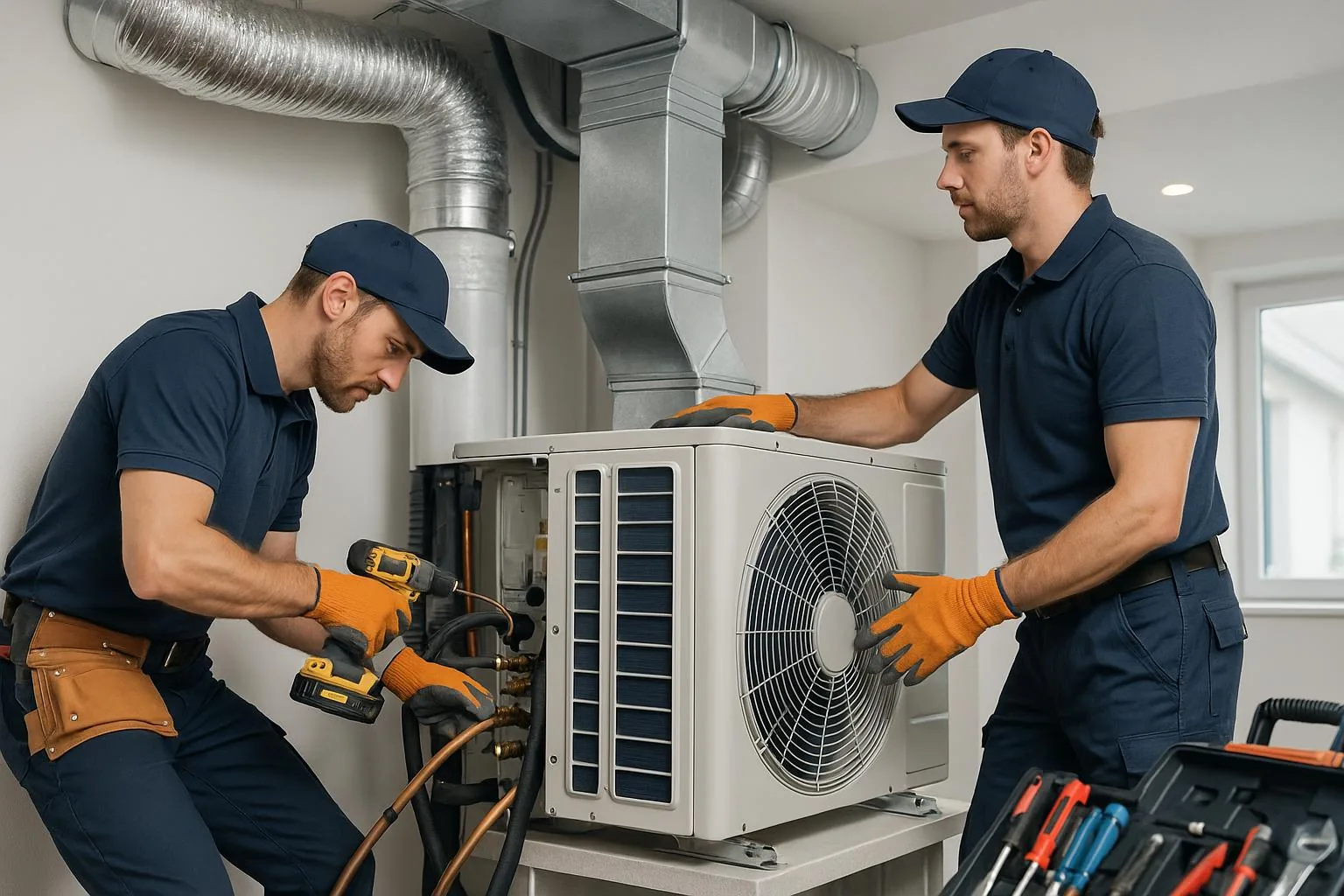
HVAC Damage Is Frequently Missed. We Make Sure It Is Not.
We partner with HVAC contractors to document and pursue the full cost of storm, lightning, and fire damage to HVAC systems.
Why HVAC Contractors Partner With DCS
HVAC equipment is one of the most frequently overlooked components in property insurance claims. After a hail storm, insurance adjusters focus on the roof and exterior and often miss damage to outdoor condensing units. After a lightning strike, the full extent of electrical damage to HVAC components may not be apparent until a technician inspects the system.
We document the reasonable covered repair scope and support the claim with estimates, photographs, and contractor findings. No settlement, complete project funding, or supplement approval is guaranteed; deductibles, limits, exclusions, fees, and actual repair costs can leave an owner-funded amount.
The HVAC Contractor's Role in an Insurance Claim
HVAC is the single most under-claimed system on a property loss. On a hail claim the field adjuster is on the roof; on a fire claim they stop at visible char; on a lightning claim the unit may look fine and fail two weeks later. In every case the technical authority on whether the equipment is damaged - and how badly - is the HVAC contractor, not the adjuster. If your technician does not document it, it does not make the estimate.
Your role on the claim is to establish the damage and tie it to the covered peril. Our role is to make sure that documentation lands on the carrier's estimate as a real, scoped line item rather than a closed question. Below are the covered scenarios where HVAC is most often left on the table.
Hail-Crushed Condenser Coils
Hail flattens the aluminum fin pack and copper coils on the outdoor unit, choking airflow and refrigerant heat transfer. The unit runs hot, loses efficiency, and fails early. It is typically covered storm damage - and almost always missed on a roof-focused claim because the condenser sits off the inspection path.
Lightning and Surge Failure
A strike or induced surge takes out compressors, fan motors, capacitors, contactors, and control boards - often with no visible exterior sign and a delayed failure. We document the failure component by component and correlate it to a documented lightning event in the loss area.
Smoke and Soot in the Air System
After a covered fire, soot migrates through return and supply ducts into the air handler and evaporator coil. Cleaning or replacing contaminated ductwork and components is part of the fire loss, but carrier estimates routinely stop at the visible burn area.
Freeze-Burst Lines and Cracked Coils
Freezing weather can damage water-filled HVAC piping, coils, and condensate components, while refrigerant-system icing and other mechanical failures can have different causes. A qualified HVAC contractor should identify the failed component and mechanism; coverage depends on the documented event and policy conditions. We document the cause and the full component scope rather than a partial repair.
How an HVAC Claim Moves, Step by Step
HVAC almost never originates its own claim - it rides on a larger storm, fire, or lightning loss. The job is to make sure it does not get lost in that larger file. Here is the sequence and where the equipment tends to fall off the estimate.
1. Loss event and prompt reporting
A hail storm, lightning strike, fire, or freeze occurs. The policyholder reports the claim promptly. The HVAC contractor inspects and identifies equipment damage early, before the field inspection closes the question.
2. Technical inspection and cause-of-loss tie
The technician documents the damage - fin crush depth, failed electrical components, soot migration, or freeze cracking - and ties it to the covered peril with photographs, model/serial data, and test results. Delayed lightning failures are correlated to the documented strike in the loss area.
3. Carrier inspection and the missed-line moment
The carrier inspects the roof or burn area and often skips the condenser or air handler. DCS coordinates the inspection and presents the HVAC documentation so the equipment is scoped on the same estimate rather than treated as a separate, contestable claim later.
4. Repair-versus-replace and supplement
We document whether repair is cost-effective or the unit is functionally totaled, and prepare a supplement where the carrier omitted HVAC or paid a partial repair. Manufacturer part availability and system-matching (a matched R-410A coil set) support a full replacement where warranted.
5. Code upgrades and Ordinance or Law
A replacement may trigger current mechanical or electrical code - disconnect, whip, pad, or refrigerant-type change. Where the policy includes Ordinance or Law coverage, we identify and document the code-required upgrades to the policy sub-limit.
6. Payment, depreciation recovery, and closeout
Carriers usually pay actual cash value first and hold recoverable depreciation until the work is done and documented. We track the holdback, submit completion documentation, and follow up until the recoverable depreciation is released.
The Documentation That Wins HVAC Supplements
An HVAC supplement is won when the carrier cannot honestly look at the file and say "show me the damage." After working the carrier side from 2010 to 2017, our founder knows precisely what a desk reviewer needs to see to release payment. This is the file we help your technicians build.
The HVAC evidence package
- Cause-of-loss tie to a covered peril (storm/strike/fire/freeze)
- Model and serial numbers, age, and tonnage of each unit
- Close-up and contextual photos of fin crush, soot, or failure
- Fin-comb or crush-depth evidence on hail claims
- Component test results (compressor, motor, capacitor, board)
- Duct contamination documentation for fire losses
- Repair-versus-replace cost analysis with part availability
- Manufacturer specifications supporting the scope
Why each piece matters
Serial numbers establish age and replacement value. Crush-depth photos defeat the "it still runs" dismissal. Component test results prove a surge failure that has no visible sign. The repair-versus-replace analysis is what turns a partial coil payment into a full system replacement. Each piece closes a door the desk reviewer would otherwise use to cut the scope.
When the carrier still underpays, the same package supports a supplement and, if needed, the policy's Appraisal clause - a policy process that resolves the amount of loss. Appraisal is not a lawsuit; we manage the valuation side.
Carrier Tactics That Cut HVAC Scope - and How We Counter Them
The "it still turns on" dismissal
A unit that powers up is treated as undamaged even with crushed coils. Counter: fin-comb and crush-depth photos plus efficiency/airflow impact tied to the manufacturer specs.
Skipping the condenser on a roof claim
The field adjuster never inspects the ground-level unit. Counter: HVAC documented and presented as a line item on the same storm estimate, coordinated at the carrier inspection.
Paying a partial repair on a totaled unit
A new coil or motor is offered on a unit that is functionally totaled. Counter: a repair-versus-replace analysis with age, repair cost, and part availability.
Denying delayed lightning failure
A failure weeks after the strike is called "wear and tear." Counter: component test results plus correlation to the documented lightning event in the loss area.
Stopping fire scope at visible char
Duct and air-handler soot contamination is left off. Counter: documented soot migration through the return/supply system and into the coil.
Ignoring system matching and code
A mismatched coil set or pre-code reinstall is assumed. Counter: matching support (FL 626.9744) and Ordinance or Law documentation for code-required upgrades.
DCS is a licensed public adjuster - we value, document, and negotiate the claim. We do not give legal advice or pursue bad-faith litigation; where a dispute needs an attorney, the policyholder engages counsel directly.
How We Support HVAC Contractors
Hail Damage Documentation
We document hail damage to outdoor condensing units with photographs, measurements, and manufacturer specifications.
Lightning Damage Claims
We document and argue for the full cost of HVAC damage caused by lightning strikes and power surges.
Fire and Smoke Damage
We document HVAC damage from fire and smoke, including contamination of ductwork and air handling equipment.
Freeze Damage Claims
We document HVAC damage from freeze events, including damage to water-filled piping, coils, and condensate components.
Replacement vs Repair Analysis
We document when repair is not cost-effective and argue for full replacement of damaged HVAC equipment.
Team Training
Free training for HVAC teams on claims documentation and how to write damage reports that support insurance claims.
Free Claims Documentation Training for Your Team
We offer complimentary on-site or virtual training for your staff on how to properly document insurance claims, what to do when insurance is involved, and how to protect your customers and your business. This is not a sales pitch. It is practical education that makes your team more valuable to every client you serve.
What We Expect From Network HVAC Partners
Dependable Claims Specialists - Public Insurance Adjusters refers HVAC contractors to policyholders whose claims involve HVAC damage. Because our reputation is on the line with every referral, the contractors in our network meet a clear set of expectations. If you are an HVAC contractor in the Houston, Texas, or South Florida market and want to partner with us, here is what we look for.
Proper Licensing and Insurance
Active state HVAC license, general liability coverage, and workers compensation as applicable. We verify these before adding a contractor to the referral network.
Insurance-Grade Documentation
Photographs, manufacturer specifications, model and serial numbers, and a written scope of repair or replacement. Our free training program covers exactly what insurance carriers expect to see.
Communication With the Adjuster
Network partners coordinate with us during the claim. That means responding to questions, providing supplementary documentation when asked, and meeting on-site when re-inspections are scheduled.
Scope and Estimate Discipline
Repair scopes that match what was documented, line items that reflect current market pricing, and Xactimate-aligned estimates when requested. We do not refer contractors who pad scope or write estimates that fall apart under carrier review.
Workmanship and Warranty
Network partners stand behind their work with manufacturer-aligned warranties on parts and labor. Callbacks for warranty work are handled directly with the homeowner without involving the claim file.
Customer Experience
Policyholders should feel respected at every interaction. Clean job sites, on-time arrival, and clear communication are baseline expectations. Negative customer feedback is grounds for removal from the referral network.
If your HVAC company meets these expectations and you want to grow your insurance-related work in the Houston market, we would welcome the conversation. Email intake@dcspia.com or call 833-4UR-LOSS to introduce yourself.
Why DCS Is the Right Adjuster for HVAC Claims
Dependable Claims Specialists - Public Insurance Adjusters was founded by a former carrier field adjuster and team lead who worked the insurance company's side of property claims from 2010 to 2017. We have inspected the roofs where the condenser was never looked at, written the estimates that skipped the air handler, and applied the "it still runs" logic that leaves HVAC off the file. We know exactly where the equipment gets dropped - and now we use that knowledge for the policyholder.
Licensed in TX and FL
Texas Firm #3134924, Florida Firm #W820363. Public adjusters under TX Ins. Code Ch. 4102 and Fla. Stat. 626.854.
No Recovery, No Fee
Contingency-based public adjusting within statutory fee caps (10% in Texas; for Florida home and condo unit claims, usually 20%, or 10% within a year after a declared emergency). No cost to network contractors.
Equipment-Fluent
We understand tonnage, refrigerant types, repair-versus-replace, and Xactimate-aligned estimating - the detail carriers actually respond to.
Frequently Asked Questions
Does homeowners insurance cover HVAC damage?
How does hail damage affect HVAC equipment?
Can a lightning strike damage HVAC equipment?
Why does the roofer get paid but the HVAC unit gets missed?
Does insurance cover smoke and soot contamination in ductwork?
Is freeze damage to HVAC covered?
When does repair versus replacement matter, and who decides?
Does the claim pay to match a damaged half of a split system?
Are code upgrades to HVAC work covered?
How fast does the insurer have to pay an HVAC claim?
Should the HVAC contractor argue scope with the adjuster directly?
Do you offer training for HVAC contractors?
Commercial Claims We Handle in Houston
When an HVAC failure or repair is part of a commercial loss, these are the Houston-specific claim pages DCS handles for Harris County businesses, served from our Webster, TX headquarters.
