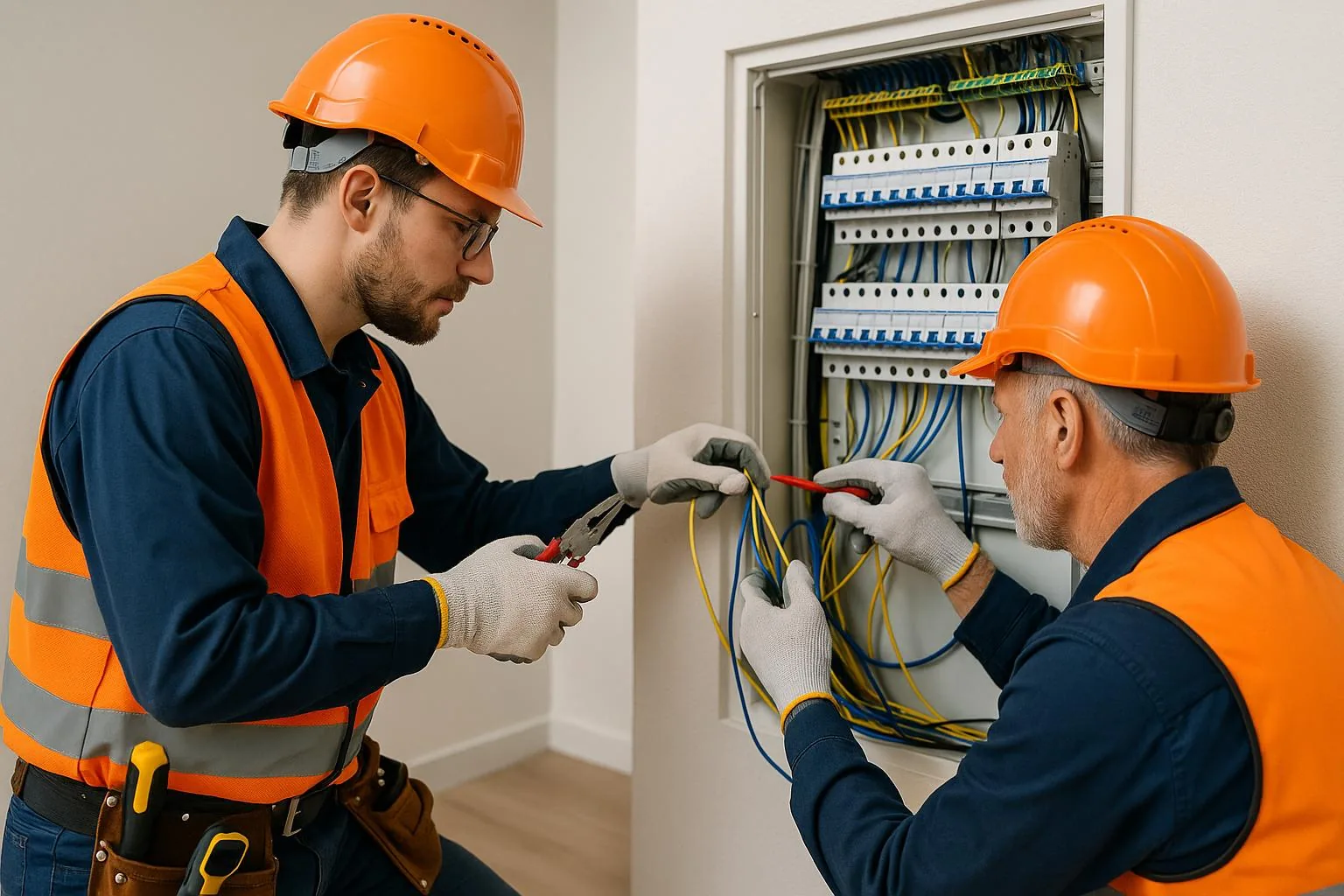
Electrical Damage Is a Safety Issue. Make Sure the Insurance Claim Treats It That Way.
We partner with electrical contractors to document and pursue the full cost of storm, lightning, and fire damage to electrical systems, including all code-required upgrades.
Why Electrical Contractors Partner With DCS
Electrical damage claims are complex because the full extent of damage is often not visible without a thorough inspection. A lightning strike or fire can damage wiring inside walls, panels, and junction boxes that look fine from the outside. Insurance adjusters who do not understand electrical systems often underestimate the scope of damage and the cost of a safe, code-compliant repair.
We document the reasonable covered repair scope and support the claim with estimates, photographs, and contractor findings. No settlement, complete project funding, or supplement approval is guaranteed; deductibles, limits, exclusions, fees, and actual repair costs can leave an owner-funded amount.
The Electrical Contractor's Role in an Insurance Claim
Electrical damage is the one place on a property claim where underpayment is also a safety problem. A surge-degraded panel or a heat-compromised circuit that gets left off the estimate does not just shortchange the homeowner - it leaves a fire hazard energized inside the walls. The licensed electrician is the only person on the claim qualified to find that damage, and the only person whose testing can prove it to a carrier.
Your role is to assess and test the system and tie the damage to the covered peril. Our role is to translate your testing into a documented claim for the carrier - including the code-required upgrades a safe repair triggers. Below are the covered scenarios where electrical scope is most often missed.
Lightning and Surge Damage
A strike or induced surge degrades the panel bus, breakers, grounding, branch-circuit wiring, and connected devices - often invisibly. Partial breaker swaps on a compromised panel are unsafe. We document the component-level damage that justifies full panel and circuit scope.
Fire and Heat-Degraded Wiring
Heat degrades wire insulation and connections beyond the charred area; soot intrudes into boxes and panels. A safe repair often means rewiring circuits that show no visible char. We document the extended scope and the testing basis for it.
Code-Required Upgrades (NEC)
Repairing a damaged section of an older system can trigger current National Electrical Code requirements - AFCI/GFCI protection, grounding, panel updates. Where the policy includes Ordinance or Law coverage, these are payable. We document the code trigger and the sub-limit.
Connected Equipment
A surge travels downstream to HVAC boards, well pumps, openers, and electronics. These are part of the same covered loss but are routinely omitted because no one ties them to the strike. We inventory and document the connected-equipment damage.
How an Electrical Claim Moves, Step by Step
Electrical claims live or die on the inspection. Because so much of the damage is hidden, the difference between a properly paid claim and an underpaid one is whether the system was actually tested and documented before the estimate hardened. Here is the sequence.
1. Loss event, safety check, and prompt reporting
A lightning strike, fire, or storm event occurs. Safety first - de-energize hazards. The policyholder reports the claim promptly. The electrician performs an initial assessment before the field inspection closes the question.
2. Component-by-component testing and cause tie
The electrician tests the panel, breakers, grounding, branch circuits, devices, and connected equipment, documenting tested-versus-failed results and tying the failure to the covered peril. This testing is the evidence a carrier cannot dismiss.
3. Carrier inspection and the hidden-damage gap
The carrier inspects and tends to pay only the visible items. DCS coordinates the inspection and presents the testing so hidden panel, wiring, and connected-equipment damage is scoped rather than ignored.
4. Code-upgrade identification and Ordinance or Law
We identify which repairs trigger current NEC requirements and separate code-required upgrades from voluntary betterments. Where the policy includes Ordinance or Law coverage, we document the trigger and claim to the sub-limit.
5. Supplement for discovered damage
Electrical damage is frequently discovered once walls are opened during repair. We prepare supplements for the additional circuits, devices, and code work found during the job rather than letting the contractor absorb it.
6. Payment, depreciation recovery, and closeout
Carriers usually pay actual cash value first and hold recoverable depreciation until the work is completed and documented. We track the holdback, submit completion documentation, and follow up until the recoverable depreciation is released.
The Documentation That Wins Electrical Supplements
An electrical supplement is won on testing, not assertion. After working the carrier side from 2010 to 2017, our founder knows that a desk reviewer will pay tested-and-failed components and cut everything that reads as opinion. This is the file we help your electricians build.
The electrical evidence package
- Cause-of-loss tie to a covered peril (strike / fire / storm)
- Component-by-component tested-versus-failed results
- Panel, breaker, bus, and grounding assessment
- Branch-circuit and device inventory with failures noted
- Connected-equipment damage inventory (HVAC boards, pumps, electronics)
- Photographs of damage, char, and soot intrusion in boxes/panels
- NEC code-trigger documentation for Ordinance or Law
- Written safety basis for any extended-scope rewiring
Why each piece matters
Tested-versus-failed results turn invisible surge damage into provable damage. The panel assessment is what justifies full replacement over a few breakers. The code-trigger documentation is what unlocks Ordinance or Law instead of a denial for "betterment." The connected-equipment inventory captures losses that would otherwise vanish. Each closes a door a desk reviewer would use to cut the scope - or to leave a hazard unfunded.
When the carrier still underpays, the same package supports a supplement and, if needed, the policy's Appraisal clause - a policy process that resolves the amount of loss, not a lawsuit. We manage the valuation side.
Carrier Tactics That Cut Electrical Scope - and How We Counter Them
Paying only the visible items
A few outlets are paid while a degraded panel and hidden circuits are ignored. Counter: component-by-component tested-versus-failed documentation of the hidden scope.
Breakers instead of the panel
A partial breaker swap is offered on a surge-compromised panel. Counter: bus, breaker, and grounding test results showing the panel itself is damaged.
Calling code upgrades "betterment"
Required NEC upgrades are denied as voluntary improvements. Counter: documentation of the specific code trigger and the policy's Ordinance or Law coverage and sub-limit.
Stopping fire scope at the char line
Heat-degraded wiring beyond the visible burn is left off. Counter: testing showing degraded insulation/connections and the safety basis for extended rewiring.
Dropping connected equipment
Surge-killed HVAC boards, pumps, and electronics are never tied to the strike. Counter: a connected-equipment inventory linked to the documented surge event.
Delaying a hazardous claim
An unsafe home sits while the file is "reviewed." Counter: a complete, safety-documented file with every request and response in writing; enforcing a statutory deadline is attorney work.
DCS is a licensed public adjuster - we value, document, and negotiate the claim. We do not give legal advice or pursue bad-faith litigation; where a dispute needs an attorney, the policyholder engages counsel directly.
How We Support Electrical Contractors
Lightning Damage Documentation
We document lightning-related electrical damage including panel damage, wiring damage, and connected equipment.
Code Upgrade Recovery
We identify and document Ordinance or Law coverage for code-required electrical upgrades triggered by covered repairs.
Fire and Smoke Damage
We document electrical damage from fire and smoke including wiring, panels, and fixtures.
Hidden Damage Documentation
We document the need for thorough inspection of hidden electrical components and argue for the cost of that inspection.
Supplement Claims
We prepare supplement claims for additional electrical damage discovered during the repair process.
Team Training
Free training for electrical teams on claims documentation, code upgrade documentation, and damage report writing.
Free Claims Documentation Training for Your Team
We offer complimentary on-site or virtual training for your staff on how to properly document insurance claims, what to do when insurance is involved, and how to protect your customers and your business. This is not a sales pitch. It is practical education that makes your team more valuable to every client you serve.
What We Expect From Network Electrical Partners
Dependable Claims Specialists - Public Insurance Adjusters refers electrical contractors to policyholders whose claims involve electrical damage. Because our reputation rides on every referral, contractors in our network meet a clear set of expectations. If you are an electrical contractor in the Houston, Texas, or South Florida market and want to partner with us, here is what we look for.
Proper Licensing and Insurance
For Texas electrical work, the electrical contractor license and its assigned master electrician, plus general liability coverage, workers compensation as applicable, and local permitting credentials. We verify the licenses and registrations required for the business and the people supervising and performing the work before adding a contractor to the referral network.
Cause-of-Loss and Damage Documentation
Lightning strike or surge damage requires component-by-component assessment of the panel, branch circuits, switches, outlets, and connected appliances. We expect written assessments, photographs, and tested-versus-failed documentation our training program covers in detail.
Communication With the Adjuster
Network partners coordinate with us during the claim. Respond to documentation requests, provide supplementary photographs when asked, and meet on-site for re-inspections when necessary.
Scope and Estimate Discipline
Repair scopes that match the documentation, line items that reflect current market pricing, and estimates that hold up under carrier review. We do not refer contractors who pad scope or chase Cat-event price markups.
Workmanship and Warranty
Network partners stand behind their work with manufacturer-aligned warranties on parts and labor. Callbacks for warranty issues are handled with the homeowner outside the claim file.
Customer Experience
Policyholders should feel respected at every interaction. Clean job sites, on-time arrival, and clear communication are baseline expectations. Negative customer feedback is grounds for removal from the referral network.
If your electrical company meets these expectations and you want to grow your insurance-related work in the Houston market, we would welcome the conversation. Email intake@dcspia.com or call 833-4UR-LOSS to introduce yourself.
Why DCS Is the Right Adjuster for Electrical Claims
Dependable Claims Specialists - Public Insurance Adjusters was founded by a former carrier field adjuster and team lead who worked the insurance company's side of property claims from 2010 to 2017. We have written the estimates that paid a handful of outlets and called the rest "betterment," and we have seen how often hidden electrical damage - a real fire hazard - gets left unfunded. We know exactly where these claims get cut, and now we put that knowledge to work for the policyholder and the safe, code-compliant repair.
Licensed in TX and FL
Texas Firm #3134924, Florida Firm #W820363. Public adjusters under TX Ins. Code Ch. 4102 and Fla. Stat. 626.854.
No Recovery, No Fee
Contingency-based public adjusting within statutory fee caps (10% in Texas; for Florida home and condo unit claims, usually 20%, or 10% within a year after a declared emergency). No cost to network contractors.
Code-Fluent
We understand NEC code triggers, Ordinance or Law coverage, and Xactimate-aligned estimating - the framing carriers actually respond to.
Frequently Asked Questions
Does homeowners insurance cover electrical damage?
How does lightning damage electrical systems?
Why is electrical damage so often underestimated on a claim?
Should the whole panel be replaced after a lightning strike, or just breakers?
Does fire damage to wiring require rewiring beyond the burn area?
Are code upgrades covered when electrical systems are repaired after a loss?
What is the difference between repair, code-required upgrade, and a betterment the policy will not pay?
Are surge-damaged appliances and connected equipment covered?
How fast does the insurer have to pay an electrical claim?
Should the electrical contractor argue the claim with the adjuster directly?
What does this cost the policyholder and the contractor?
Do you offer training for electrical contractors?
Commercial Claims We Handle in Houston
When an electrical repair is part of a commercial loss, these are the Houston-specific claim pages DCS handles for Harris County businesses, served from our Webster, TX headquarters.
