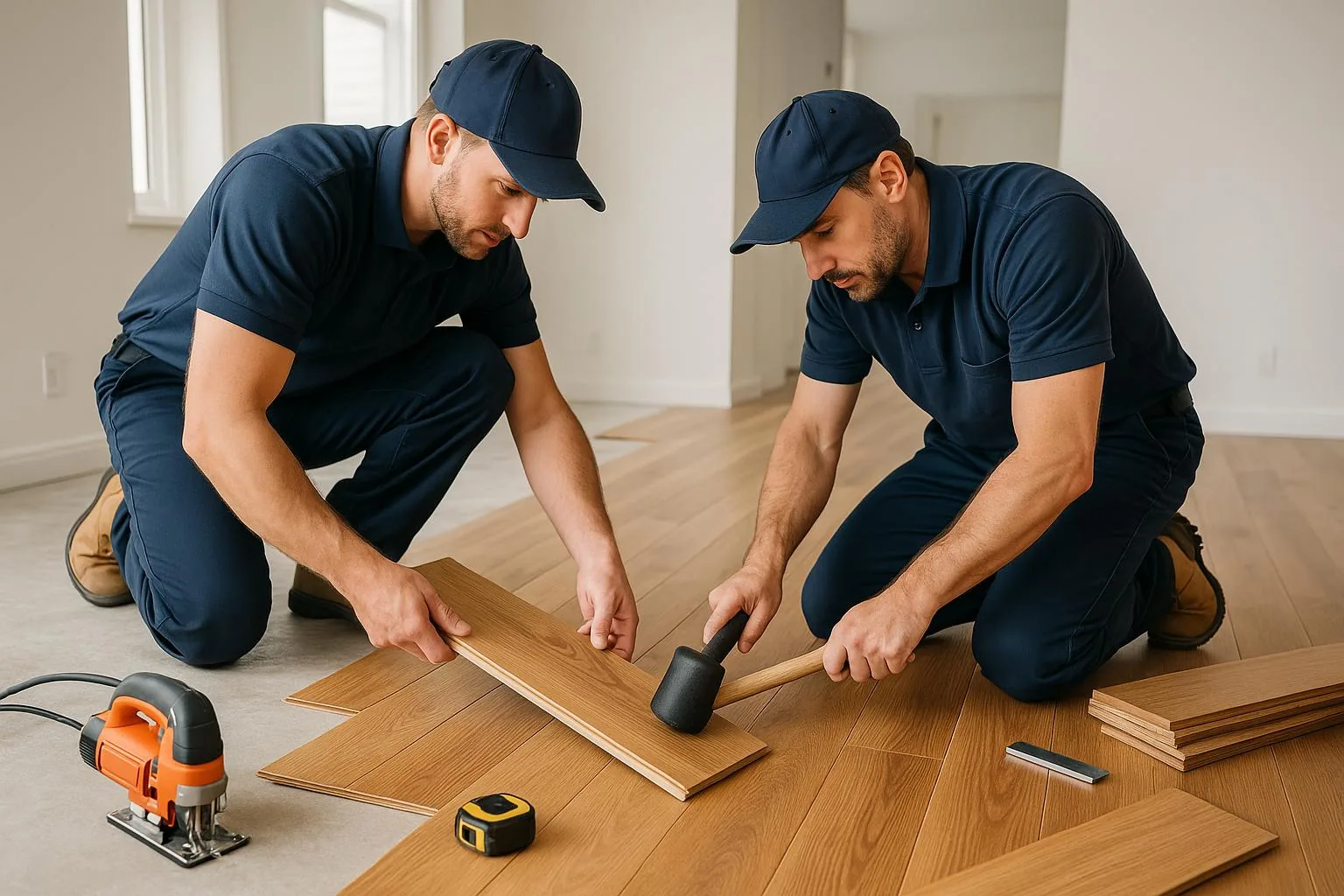
Matching Matters. We Build the Documented Case for It.
We partner with flooring contractors to document damage properly and argue for the full scope of replacement when matching is not possible.
Why Flooring Contractors Partner With DCS
Flooring claims are among the most frequently disputed in property insurance. Matching can affect the reasonable repair scope when replacement material differs from adjoining undamaged material. Whether a larger area is in scope depends on the policy, the facts, and applicable law, and adjusters and policyholders often disagree about it. We document the matching factors and the case for the scope the floor supports.
We also handle the moisture documentation side of water-damaged flooring claims, working with restoration contractors so the drying scope is properly documented and the full flooring replacement is pursued.
Items frequently underpaid or omitted on flooring estimates:
- - Replacement of the full continuous area when matching is not possible
- - Tear-out and disposal of the damaged flooring and underlayment
- - Floor prep, leveling, and moisture barrier or underlayment
- - Transition strips, thresholds, quarter round, and base shoe
- - Furniture moving (contents manipulation) and re-set
- - Subfloor repair when water reaches the structure beneath the finish
What a Flooring Insurance Claim Actually Involves
A flooring claim is a property insurance claim where the loss damaged the finished floor - hardwood, engineered wood, laminate, luxury vinyl plank, sheet vinyl, tile, or carpet - along with the underlayment, subfloor, and trim tied to it. The claim exists to restore the floor to its pre-loss condition under a covered peril, which usually means water from a sudden burst pipe or appliance failure, fire and smoke, storm-driven water, or accidental discharge. It does not cover wear, gradual leaks, deferred maintenance, or flood (which requires separate flood coverage).
The deceptively simple question - "repair this room or replace the whole floor?" - is where most of the money is won or lost. A floor is a connected, continuous surface designed to read as one. When a slice of it is damaged and that slice cannot be matched to the rest in color, sheen, dye lot, plank profile, or grout, repairing only the damaged section leaves a visible patch. That is the matching problem, and it is the single most important concept in flooring claims.
Who needs this and when
A homeowner or business owner may want a flooring-focused advocate when the carrier's estimate pays to patch a single room, when the damaged product is discontinued, when the floor runs continuously across multiple rooms, when moisture has reached the subfloor, or when the adjuster disputes whether the floor can be dried and refinished versus replaced. A flooring contractor needs an adjuster partner when an insurance job is underfunded relative to the documented scope of the loss - so the contractor can perform the correct scope without absorbing the gap or shortchanging the homeowner.
The Matching Rule and Continuous-Area Replacement
Matching is the principle that when damaged property is repaired or replaced, the finished result must be reasonably uniform and consistent in appearance with the undamaged adjacent area. In Florida, this is addressed by statute. Florida Statute 626.9744 addresses matching, and how it applies to a particular floor is a question for a licensed attorney. The statute speaks to repair or replacement of items in adjoining areas when a loss requires replacement of items and the replaced items do not match adjacent undamaged items in quality, color, or size, weighed against the factors it lists. Line-of-sight uniformity is how adjusters and estimators commonly apply that principle in practice, not language the statute itself uses. Texas has no identical matching statute, but matching is regularly treated as a valuation question under the policy and is a frequent subject of the appraisal process.
The battleground is the definition of the area. The carrier wants the smallest possible footprint - "just the damaged room." Whether a larger area is in scope depends on the policy, available comparable materials, and the facts; one way to frame it is the continuous area: flooring of the same material and color that runs without a natural break such as a threshold, transition strip, or change in material. If the same luxury vinyl plank flows uninterrupted from the living room through the hall into the kitchen, and the damaged planks cannot be matched, the argument is that the entire continuous run is the unit of replacement.
How we build the matching case
- Identify the product. Manufacturer, line, color, dye lot, plank or tile dimensions, sheen, and grout color where applicable.
- Confirm availability. Written confirmation from the manufacturer or supplier when a product is discontinued or the dye lot is no longer available.
- Map the continuous area. Photographs and a measured diagram showing the floor runs without a break across rooms and where transitions actually exist.
- Demonstrate the mismatch. Side-by-side comparison of the closest available product against the existing floor in the same line of sight.
- Value the correct scope. An Xactimate estimate that prices the full continuous area with proper tear-out, prep, underlayment, and trim - not just the visibly damaged square footage.
The Flooring Claim Process, Step by Step
Report and acknowledgment
The loss is reported to the carrier and the claim is opened. Mitigate immediately - extract standing water and begin drying - to avoid a defense that you let the damage worsen, and photograph conditions before anything is moved.
Inspection and moisture mapping
The adjuster inspects. We coordinate calibrated moisture readings and a moisture map consistent with IICRC S500 water-damage standards so the wet footprint, including the subfloor, is documented before drying changes the evidence.
Scope and matching determination
We document the product, the continuous area, and whether the floor can be dried and refinished or must be replaced. Discontinued products and unavailable dye lots are confirmed in writing.
Estimate and valuation
A full-scope Xactimate estimate is prepared and compared line-by-line against the carrier estimate. ACV generally means replacement cost less applicable depreciation; the initial payment may then be reduced by the deductible and other policy limitations.
Negotiation
We negotiate the scope and pricing with the carrier - matching, continuous area, subfloor, prep, and trim. This is licensed public-adjusting work, not legal representation.
Supplements
If demolition or drying reveals hidden damage - rotted subfloor, wider water migration - we prepare a documented supplement. Well-supported supplements are typically approved.
Payment and recoverable depreciation
The carrier issues ACV, then releases recoverable depreciation after the work is completed and documented. We submit the completion documentation and follow up until the release is made.
Appraisal if needed
If a genuine dispute over the amount of loss remains, the policy Appraisal clause lets each side name an appraiser and a neutral umpire decide. Appraisal resolves the dollar amount of the loss - it is a policy process, not a lawsuit.
Documents and Standards That Decide Flooring Claims
Proof of loss and estimates
A sworn proof of loss states the claimed amount. The supporting estimate - in Xactimate format - is what the carrier actually evaluates. Estimates that mirror the carrier's own pricing platform and capture the full continuous area carry the most weight.
Moisture documentation (IICRC S500)
The IICRC S500 standard for water damage restoration defines how moisture is measured and how drying is documented. Calibrated readings, moisture maps, and drying logs distinguish a floor that can be restored from one that must be replaced.
Fire and smoke documentation (IICRC S700)
The IICRC S700 standard for fire and smoke damage restoration guides documentation of soot contamination, heat damage, and odor that can render flooring unrestorable even where flames never reached it.
Matching and product records
Manufacturer specs, dye-lot identification, and written discontinuation confirmation are the backbone of a matching argument. Florida Statute 626.9744 addresses replacement of items in adjoining areas when replaced items do not match in quality, color, or size; how it applies to a specific claim is a question for a licensed attorney.
Common Mistakes and Carrier Tactics to Watch For
Paying to patch a single room
The most common underpayment. When a continuous floor cannot be matched, room-only payment leaves a visible patch and is not a true restoration to pre-loss condition.
Ignoring the subfloor
Water that reaches the subfloor can rot or warp it. An estimate that replaces only the finish surface and skips subfloor repair sets up a failed installation and a future supplement.
Excessive depreciation
Aggressive depreciation on the ACV payment shrinks the upfront check. We test whether the depreciation applied is reasonable for the material and age, and we pursue the release of recoverable depreciation.
Drying before documenting
Take photographs and initial moisture readings promptly when safe, while arranging urgent mitigation. Do not delay work needed to protect people or prevent further damage merely to complete documentation. Keep the restorer's daily readings, photos, invoices, and any safely retained samples.
Missing prep and trim line items
Tear-out, disposal, floor leveling, underlayment, transitions, and quarter round are real costs. Estimates that omit them understate the loss.
Treating matching as automatically denied
Adjusters sometimes assert matching does not apply. In Florida a statute (626.9744) addresses replacement in adjoining areas when items do not match, and how it applies is a question for a licensed attorney; in both states matching is a valuation issue that the appraisal process can resolve.
Why DCS on a Flooring Claim
Dependable Claims Specialists - Public Insurance Adjusters works only for the policyholder - never the insurance company. Our founder spent 2010 to 2017 as a carrier-side field adjuster and team lead, writing and approving the very estimates we now scrutinize. That experience means we know exactly how a flooring loss is scoped from the inside, how matching gets quietly written out of an estimate, and what documentation moves a desk adjuster to approve a full continuous-area replacement.
We prepare estimates in Xactimate, the same platform the carrier uses, and we document to recognized restoration standards (IICRC S500 for water, S700 for fire and smoke). We are licensed in both states - Texas Firm License 3134924 and Florida Firm License W820363 - and we work on contingency: no recovery, no fee. Public adjusting is claim valuation, documentation, and negotiation. We are not a law firm; bad-faith litigation and demand letters are attorney work, and we will tell you plainly when a matter belongs with counsel.
How We Support Flooring Contractors
Matching Rule Documentation
We document and argue for full floor replacement when damaged flooring cannot be matched to the undamaged adjacent areas.
Water Damage Documentation
We document water damage to flooring with moisture readings, photographs, and written assessments of repair vs replacement.
Fire and Smoke Damage
We document fire and smoke damage to flooring including soot contamination, heat damage, and water damage from firefighting.
Scope Disputes
When the insurance company disputes the scope of flooring replacement, we prepare the documentation and argument to resolve the dispute.
Supplement Claims
We prepare supplement claims for additional flooring damage discovered after the initial inspection.
Team Training
Free training for flooring teams on claims documentation, moisture documentation, and matching rule arguments.
Free Claims Documentation Training for Your Team
We offer complimentary on-site or virtual training for your staff on how to properly document insurance claims, what to do when insurance is involved, and how to protect your customers and your business. This is not a sales pitch. It is practical education that makes your team more valuable to every client you serve.
What We Expect From Network Flooring Partners
Dependable Claims Specialists - Public Insurance Adjusters refers flooring contractors to policyholders whose claims involve flooring damage. Because our reputation rides on every referral, contractors in our network meet a clear set of expectations. If you are a flooring contractor in the Houston, Texas, or South Florida market and want to partner with us, here is what we look for.
Proper Licensing and Insurance
Required state and local licenses, general liability coverage, and workers compensation as applicable. We verify these before adding a contractor to the referral network.
Matching and Scope Documentation
Detailed photo documentation, moisture readings, manufacturer specifications, and clear written assessments of where damaged flooring can or cannot be matched to undamaged adjacent areas. Our training program covers documentation that supports matching arguments.
Communication With the Adjuster
Network partners coordinate with us during the claim. Respond to documentation requests, provide supplementary photographs when asked, and meet on-site for re-inspections when necessary.
Scope and Estimate Discipline
Repair scopes that match the documentation, line items that reflect current market pricing for materials and labor, and estimates that hold up under carrier review. We do not refer contractors who pad scope or chase Cat-event price markups.
Workmanship and Warranty
Network partners stand behind their installation work with manufacturer-aligned warranties on materials and labor. Callbacks for warranty issues are handled with the homeowner outside the claim file.
Customer Experience
Policyholders should feel respected at every step. Clean job sites, on-time arrival, dust containment, and clear communication during the install are baseline expectations. Negative customer feedback is grounds for removal from the referral network.
If your flooring company meets these expectations and you want to grow your insurance-related work in the Houston market, we would welcome the conversation. Email intake@dcspia.com or call 833-4UR-LOSS to introduce yourself.
Related Claim and Guide Pages
Water Damage Claims
The most common cause of flooring loss.
Fire and Smoke Claims
Soot and heat damage to floors and trim.
Water Mitigation Guide
How to dry and document a wet structure.
Underpaid Claims
When the payout misses the full scope.
Insurance Appraisal Guide
Resolving a dispute over the amount of loss.
Public Adjuster Fee Calculator
Estimate fees under TX and FL fee caps.
Hire DCS
Start a free, no-obligation claim review.
Frequently Asked Questions
Does insurance cover flooring damage?
What is the matching rule in flooring claims?
What does Florida law say about matching flooring?
What counts as a continuous area for flooring matching?
How is hardwood floor water damage documented?
Can discontinued or out-of-production flooring change the claim?
What is Xactimate and why does it matter for my flooring estimate?
Does my deductible and depreciation affect the flooring payout?
How long does a flooring insurance claim take?
How much does a public adjuster cost on a flooring claim?
Do you offer training for flooring contractors?
Commercial Claims We Handle in Houston
When a flooring replacement follows a commercial water or fire loss, these are the Houston-specific claim pages DCS handles for Harris County businesses, served from our Webster, TX headquarters.
