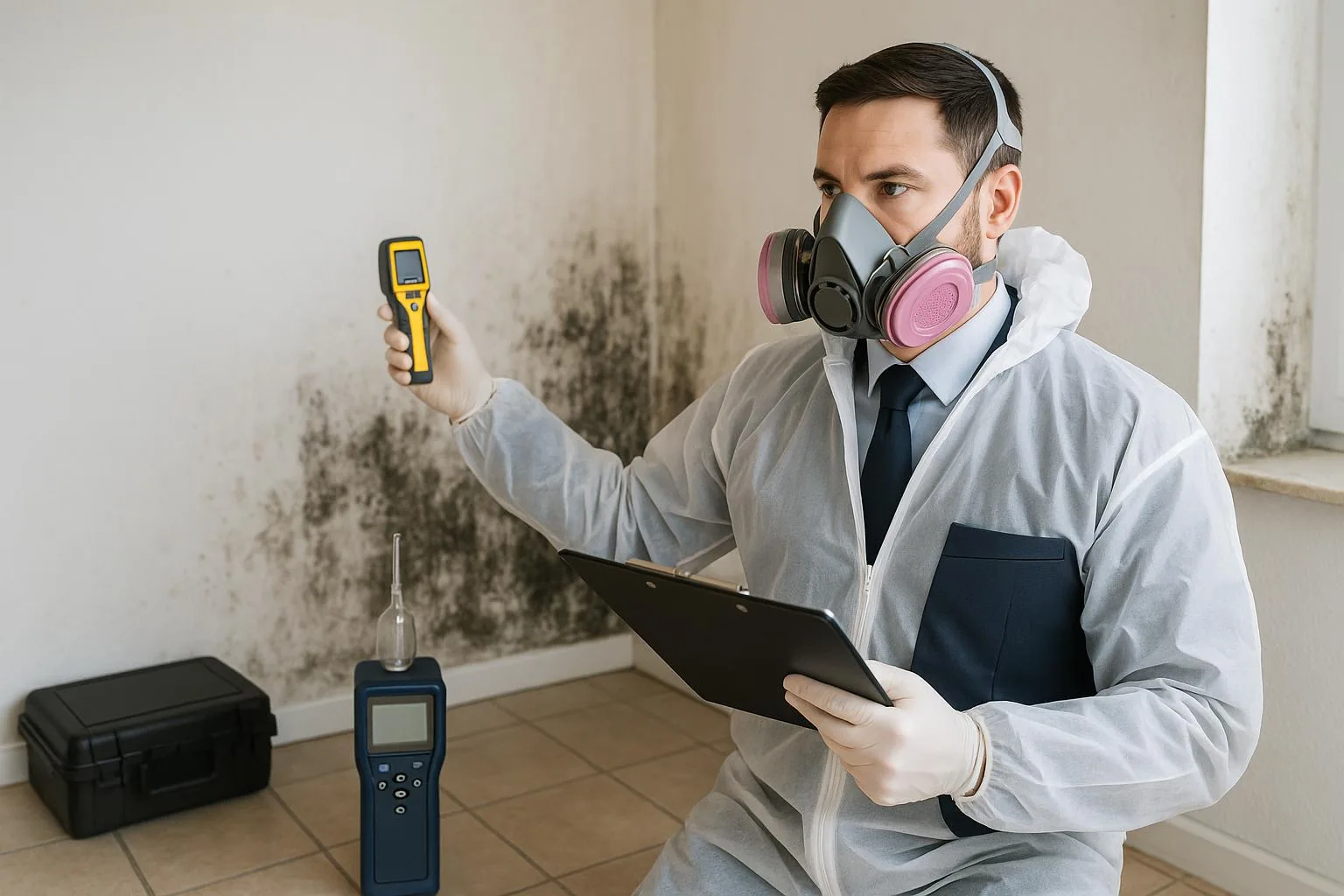
Stop the Damage Now - Dispatch a licensed mold remediation contractor
Mold spreads through wall cavities and HVAC return air. Containment + remediation by a licensed mold contractor is what most policies require for the cleanup to be covered.
Most standard property policies obligate the insured to take reasonable steps to mitigate further damage. Failing to do so can give the carrier grounds to reduce or deny the claim.
Independent referral - no fees, no commissions. DCS does not accept any compensation from network vendors. Vendors are paid for their work through the insurance claim DCS is adjusting. Recommendations are based on what is best for your claim, not on who pays us.
Quick Answer
Mold damage claims are often denied when adjusters blame long-term humidity rather than a sudden, covered water leak. A licensed public adjuster proves the mold resulted directly from a covered peril, fighting restrictive policy caps to ensure you receive a fair and complete settlement for professional remediation and testing.
Mold Coverage Depends on What Caused the Moisture. We Connect Those Dots.
Mold itself is typically not a covered peril under standard homeowner policies. However, mold that results directly from a covered water loss, such as a burst pipe, storm-driven rain intrusion, or a roof leak, is generally covered as part of that underlying claim. The key is establishing the causal connection between the covered event and the mold growth.
Insurance companies frequently deny mold claims by arguing the moisture was gradual or pre-existing. We investigate the source of moisture, document the timeline, and build the evidentiary record that connects the mold to a covered cause of loss.
- Toll Free:833-4UR-LOSS
- Texas Office:936-522-6627
- FL:954-849-3405
Common Damage Types We Document
- Structural Mold: Mold growth on framing, sheathing, subfloor, and drywall requiring remediation and replacement
- HVAC Mold: Mold in ductwork, air handlers, and coils that distributes spores throughout the home
- Contents Damage: Mold damage to furniture, clothing, documents, and personal property
- Crawl Space and Attic Mold: Mold in crawl spaces and attics from moisture intrusion or inadequate ventilation following a covered loss
- Health and Habitability: Mold that renders the home uninhabitable, triggering Additional Living Expenses coverage
- Secondary Damage: Structural deterioration from prolonged mold growth that was not promptly addressed
The Biology of Mold: Why It Grows, Where It Hides, and Why It Must Be Addressed Quickly
Mold is a naturally occurring fungus that plays an important role in the outdoor environment by breaking down organic matter. Inside a home, however, mold growth is a serious problem that affects both the structure and the health of the occupants. Understanding how mold grows helps explain why prompt action after a water loss is so critical.
Mold requires three things to grow: a food source (organic material such as wood, drywall paper, or fabric), moisture, and temperatures between roughly 40 and 100 degrees Fahrenheit. In a home, organic building materials are everywhere. The limiting factor is moisture. When a water loss introduces sustained moisture into a structure, mold growth is almost inevitable if drying is not completed within 24 to 48 hours.
Stachybotrys chartarum, commonly called black mold, is one of the most well-known indoor mold species. It requires very high moisture levels and grows on cellulose-rich materials like drywall paper and wood. While it is not the only mold of concern, it is often the one that triggers the most significant remediation requirements. Other common indoor molds include Cladosporium, Penicillium, and Aspergillus, all of which can cause respiratory symptoms in sensitive individuals.
Mold remediation is a specialized process governed by industry standards published by the Institute of Inspection, Cleaning and Restoration Certification (IICRC). Proper remediation involves containment, air filtration, removal of contaminated materials, cleaning of affected surfaces, and verification testing. The cost of proper remediation is significant and must be fully documented to support your insurance claim.
Common ways insurers minimize mold claims include arguing the mold was pre-existing, classifying the underlying moisture as gradual rather than sudden, applying mold sublimits that are lower than the full dwelling coverage, and disputing the scope of remediation required. We address each of these issues with documentation and industry standards.
What Your Policy Covers on a Mold Claim — and the Sublimit, Caveats & Endorsements That Decide the Payout
A mold claim is won by tying the mold to a covered water loss and then refusing to let the carrier squeeze the entire scope under a low mold cap. These are the coverage caveats, sublimits, and endorsements that most often move the number on a Texas or Florida mold claim — and how DCS handles each.
Mold is covered only when it follows a covered water loss
Mold itself is not a covered peril. It is covered as ensuing damage when it grows out of a covered, sudden water loss — a burst pipe, a storm-driven roof breach, an appliance failure. Mold from long-term humidity, a maintenance leak the homeowner should have addressed, or flood is excluded. The whole claim turns on this causal link, so DCS documents the source of moisture, the timeline, and the chain from the covered event to the growth.
A mold sublimit usually caps the mold-specific scope
Most Texas and Florida homeowner policies impose a mold/fungi sublimit — commonly $5,000 to $10,000, with some forms higher — that is far below the dwelling limit. Once remediation exceeds that cap, the homeowner is exposed for the difference. DCS confirms your exact sublimit from the declarations and builds the claim to recover the full cap plus everything that properly sits outside it.
Some remediation steps belong under dwelling, not the mold cap
Not every dollar of a mold loss is 'mold' for sublimit purposes. Tear-out of wet drywall, structural drying, and repair of the water-damaged materials are often payable under the dwelling/water-damage coverage, while only the mold-specific remediation (containment, antimicrobial treatment, HEPA cleaning, clearance testing) draws on the mold cap. DCS reads the form's allocation language and splits the scope to maximize recovery across both coverage parts.
A higher mold limit may have been purchased
Many carriers offer an optional endorsement that raises the mold sublimit (for example to $25,000 or $50,000) or restores it toward the dwelling limit. Homeowners frequently carry this without realizing it. DCS checks your declarations and endorsement schedule for an increased mold limit before accepting the carrier's low default cap as the ceiling.
Delay in mitigation can be used to cut the claim
Because mold begins colonizing wet materials within 24 to 48 hours, carriers argue that growth which spread after the loss is the homeowner's fault for not drying promptly — and try to limit the payout to what "should have" been a smaller remediation. DCS documents prompt mitigation, daily moisture logs, and the realistic timeline so a reasonable response is not recast as neglect.
HVAC contamination and clearance testing are routinely omitted
When spores enter the ductwork and air handler, the HVAC system itself must be cleaned or components replaced — a step frequently left out of the carrier's first estimate. Post-remediation clearance testing by a licensed assessor is also a covered, IICRC-standard step that insurers often skip. DCS scopes both so the remediation is complete and verifiable, not just visible-surface cleaning.
Additional Living Expenses apply if the home is unlivable
If mold contamination makes the home uninhabitable during remediation, your Additional Living Expenses (Coverage D) pays for temporary housing and increased living costs. This is a separate coverage from the mold sublimit and is frequently overlooked. DCS documents the habitability impairment and the ALE period so displacement costs are recovered alongside the remediation.
Coverage varies by carrier, policy form, and endorsement. These are common patterns in Texas and Florida homeowner and commercial property policies — not a description of your specific policy. Review your declarations page and endorsements, or have DCS review them with you. Educational information, not legal advice.
Handling the Claim Yourself vs Engaging DCS PIA
Texas policyholders have the right to negotiate their own claim. Hiring a licensed public insurance adjuster is optional. The table below sets out, side by side, how the same claim tasks get done in each path so you can make an informed decision.
| Claim handling task | Self-represented | DCS PIA representation |
|---|---|---|
| Statute deadline tracking (Tex. Ins. Code §§ 542.055-542.057) | Manual calendar; missed deadlines do not always trigger remedies without documentation. | Structured Chapter 542 timeline maintained from day one; every carrier action timestamped. |
| Scope of loss documentation | Photos plus a written list; rarely matches the carrier's estimating system line-by-line. | Xactimate estimate built in the same software the carrier uses, line-item-matched to scope. |
| Hidden or secondary damage assessment | Visible damage only. | Moisture mapping, thermal imaging, and engineering referrals when warranted; ensuing-loss tracking. |
| Appraisal clause invocation when valuation differs | Available to any insured but rarely invoked because the policy mechanic is unfamiliar. | Invoked when carrier scope materially undervalues the loss; appraisal and umpire fees disclosed up front. |
| Supplement filings for damage discovered during repair | Often skipped after the initial check is cashed. | Tracked through repair; supplement scopes filed against the carrier as new damage is exposed. |
| Additional Living Expense / Extra Expense documentation | Receipts assembled at the end of displacement, often incomplete. | Receipt and mileage log discipline from day one; ALE / Extra Expense submitted per policy form. |
| Mold sub-limit endorsement pursuit | Frequently left unclaimed. | Mold cause, species, and remediation protocol documented to IICRC S520; sub-limit pursued. |
| Fee structure | No third-party fee. You handle the claim yourself. | Contingency fee capped under Tex. Ins. Code § 4102.158; no recovery, no fee. Hiring a public adjuster is optional under Texas law. |
Educational comparison, not legal advice. Hiring a Texas-licensed public insurance adjuster is optional and capped at 10% of the recovery under Tex. Ins. Code § 4102.158. Public adjusters represent policyholders on claim valuation and negotiation. Legal claims for bad faith or prompt-payment damages are handled by attorneys, not public adjusters.
Tips That Protect Your Claim
Document Before Remediation Begins
Photograph all visible mold growth, water staining, and moisture damage before any remediation work begins. Once mold is removed, the photographic evidence of its extent is gone.
Do Not Disturb Mold Without Containment
Disturbing mold without proper containment spreads spores throughout the home. Do not attempt to clean or remove mold yourself. Wait for a licensed remediation professional.
Address the Moisture Source First
Mold will return if the moisture source is not corrected. Ensure the underlying water intrusion is repaired before or concurrent with mold remediation.
Get an Industrial Hygienist Assessment
An industrial hygienist can document the type and extent of mold contamination and specify the appropriate remediation protocol. This documentation strengthens your claim.
Report Promptly
Delayed reporting of mold can give the insurer grounds to argue that the damage worsened due to your failure to act promptly. Report as soon as you discover mold.
Understand Your Sublimit
Review your policy for mold coverage limits before filing. We can help you understand what your policy provides and how to maximize your recovery within those limits.
How to Reduce Your Risk
Maintain indoor relative humidity below 50% using air conditioning and dehumidifiers, especially in humid climates.
Fix water leaks promptly. Even small leaks under sinks or around toilets can create mold-friendly conditions within days.
Ensure your bathroom exhaust fans vent to the exterior and run them during and for 20 minutes after every shower.
Inspect your roof, attic, and crawl space annually for signs of moisture intrusion.
Keep gutters clean and ensure downspouts direct water away from the foundation.
Use mold-resistant drywall and paint in bathrooms, kitchens, and other high-humidity areas.
Inspect window seals and caulking annually and replace deteriorated sealants promptly.
After any water loss, ensure professional drying is completed within 48 hours to prevent mold growth.
Critical: Protect Your Claim Before Starting Any Repairs
Do not begin full repairs until your claim is fully settled. Damage is evidence. Altering or removing it before your insurer has properly documented it can eliminate coverage entirely. Insurance companies only pay for what can be proven. Only perform emergency repairs necessary to prevent further damage, and document everything with photos and video before touching anything.
What to Do Right Now
Identify and Stop the Moisture Source
Find and stop the source of moisture before addressing the mold. Mold will return if the moisture problem is not corrected.
Document Before Any Work Begins
Photograph all visible mold, water staining, and damaged materials. Do not disturb the mold before documenting.
Do Not Attempt DIY Mold Removal
Disturbing mold without proper containment spreads spores. Contact a licensed mold remediation professional.
Report the Claim Promptly
Notify your insurance company as soon as you discover mold. Delayed reporting can be used to limit your claim.
Contact DCS PIA Before the Adjuster Arrives
We will document the connection between the mold and the covered water loss and ensure the full scope of remediation is included in your claim.
Get an Industrial Hygienist Assessment
An IH assessment documents the type and extent of contamination and specifies the remediation protocol. This is essential documentation for your claim.
Do Not Accept a Settlement Without Review
Mold claims are frequently limited by sublimits and scope disputes. Review any settlement offer with us before accepting.
Only a Fool Represents Themselves
Mold claims are among the most frequently denied and disputed in residential insurance. The causal connection to a covered loss must be established, the scope of remediation must be properly documented, and sublimits must be understood and applied correctly. Without professional representation, policyholders often receive far less than their policy provides.
Insurers frequently deny mold claims by arguing the moisture was gradual or pre-existing. We document the timeline and cause to challenge these denials.
Mold sublimits are often applied incorrectly to limit coverage that should be available under the full dwelling coverage for the underlying water loss.
The scope of mold remediation is frequently underestimated in initial estimates. We ensure the full remediation protocol is included.
HVAC mold contamination is routinely excluded from initial estimates even when it is a direct result of the covered loss.
Air quality clearance testing costs are often omitted from insurer estimates. We include them as part of the complete remediation scope.
The insurance company has a team of professionals working for them. You deserve one working for you.
Get a Licensed Public Adjuster on Your SideWhy Policyholders Trust DCS PIA
We bring carrier-side experience, construction expertise, and genuine care to every claim.
We have handled mold claims resulting from hurricanes, burst pipes, roof leaks, and HVAC failures across Texas and Florida.
We work with licensed industrial hygienists to document mold contamination and specify appropriate remediation protocols.
We work on contingency. No recovery means no fee.
Our construction background gives us a detailed understanding of remediation costs and building assembly requirements.
We handle all communication with the insurer and the remediation contractor to ensure your claim is properly supported.
Frequently Asked Questions
Related Texas Claim Types We Handle
Property losses rarely fall into a single category. Explore related claim types DCS PIA documents and negotiates for Texas policyholders — each handled on a no recovery, no fee basis.
More Related Claim Types
A Property Claim Is a Process With Tripwires — Not Just a Form
Filing is the easy part. Once you report a loss, the carrier runs a process governed by your policy’s conditions and tight statutory deadlines — and most underpaid and denied claims trace back to a single step the policyholder never knew was load-bearing.
Mold claims live or die on two policy details: proving the mold resulted from a covered, sudden water loss rather than neglect or humidity, and working within the mold sublimit that most policies impose — while routing remediation steps that belong under dwelling/water coverage out of that cap.
Duties After Loss
Your policy pays only if you satisfy its post-loss conditions — prompt notice, protecting the property from further damage, documenting and itemizing what was lost, producing records, and cooperating with the investigation (including a possible examination under oath). Fall short on one and the carrier can reduce or deny the claim.
Reservation of Rights (ROR)
A reservation-of-rights letter means the carrier is investigating while reserving the right to deny coverage later. It signals the claim is contested — not a settlement — and it changes how every photo, statement, and estimate should be handled from that point forward.
Request for Information (RFI)
Carriers send repeated requests for documents, receipts, measurements, and recorded statements. Incomplete or late responses stall the file and become the carrier’s stated reason to delay payment or pay less than the loss is worth.
Proof of Loss (POL)
A sworn proof of loss is a signed, deadline-bound itemization of your damages. Understate it, overstate it, or miss the deadline, and the figure on that form can be used to cap — or contest — your recovery.
The carrier is also on a clock. Under Texas Insurance Code §542 (the Prompt Payment of Claims Act) it has fixed deadlines to acknowledge, decide, and pay a covered claim — roughly 15 / 15 / 5 days — and owes 18% annual interest when it misses them. See the full Texas claim-deadline rules →
Each of these is a place a legitimate claim quietly loses value. This is why policyholders hire DCS PIA — Dependable Claims Specialists, licensed public insurance adjusters — to document the loss, build the proof of loss, answer the carrier’s requests on time, and negotiate the valuation correctly from day one. You handle one claim in your life; the carrier handles thousands. A public adjuster levels that.
DCS represents policyholders on claim valuation and negotiation. Interpreting your legal rights, bad-faith, and litigation are matters for a licensed attorney — not a public adjuster. This is general educational information, not legal advice.
Educational Information - Not Legal Advice
The information on this page is for general educational purposes only. Dependable Claims Specialists is a licensed public adjusting firm - not a law firm. Public adjusters help policyholders inspect, document, evaluate, and negotiate property insurance claims, which includes reading and applying your policy in the ordinary course of adjusting (coverage parts, exclusions, endorsements, scope). We do not practice law and we do not provide legal advice. For legal opinions, demand letters, Chapter 542A pre-suit notices, statutory remedies under the Insurance Code, or litigation, consult a licensed attorney in your state. Texas public adjusters operate under TX Ins. Code Chapter 4102; Florida public adjusters operate under FL Statute §626.854.
