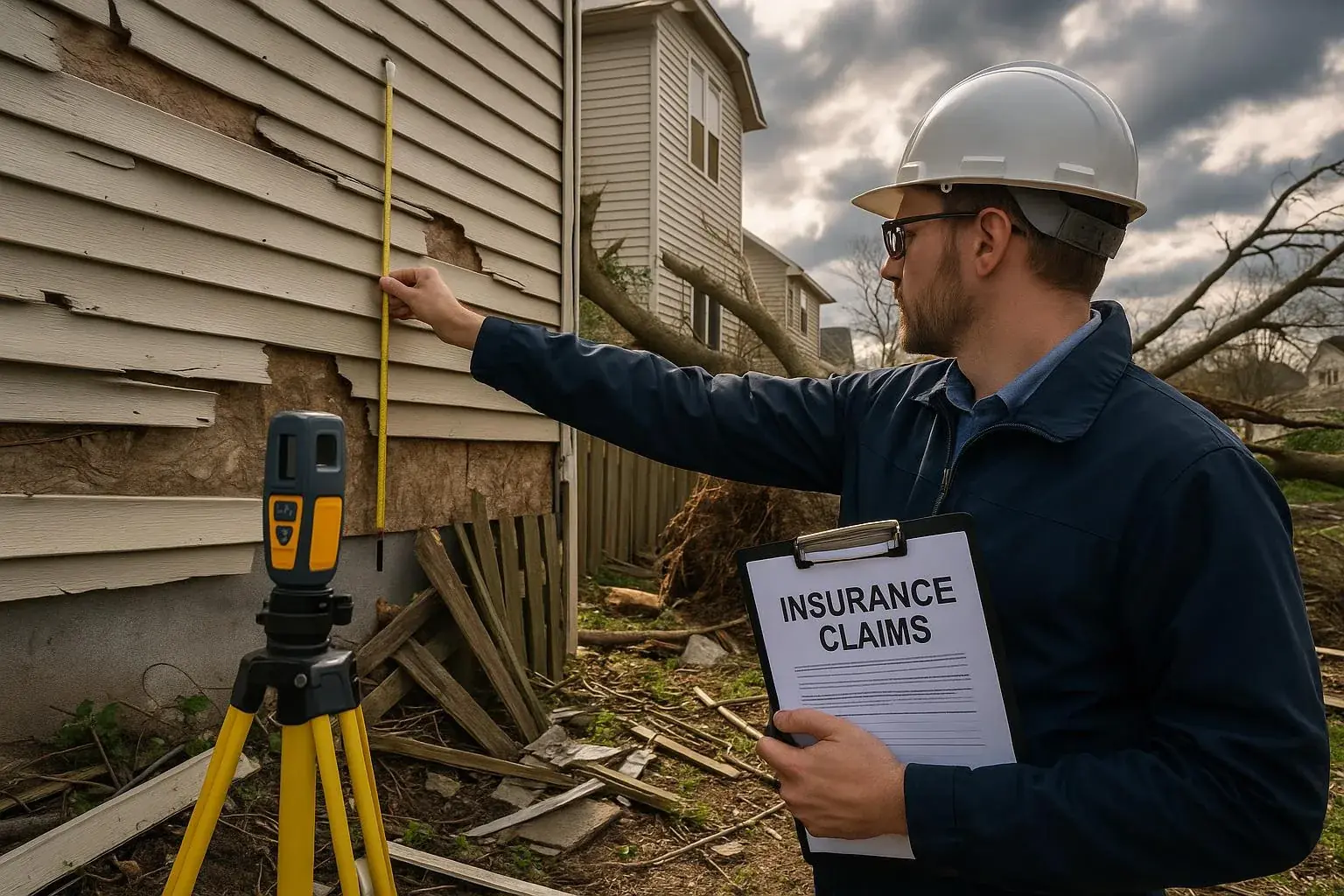
Stop the Damage Now - Dispatch a commercial tarping and roofing contractor
A wind-damaged commercial roof leaks with every rain event. Tarping protects the interior and your business interruption exposure.
Most standard property policies obligate the insured to take reasonable steps to mitigate further damage. Failing to do so can give the carrier grounds to reduce or deny the claim.
Independent referral - no fees, no commissions. DCS does not accept any compensation from network vendors. Vendors typically bill their work to the insurance claim; coverage depends on your policy and the claim outcome. Recommendations are based on what is best for your claim, not on who pays us.
Quick Answer
Commercial wind damage claims are heavily disputed, with adjusters routinely blaming 'wear and tear' or preexisting conditions for building envelope failures. A licensed public adjuster utilizes meteorological data, structural engineering analysis, and forensic accounting to prove storm causation, challenging denials and working to secure the funds necessary to repair the structure and offset business interruption losses.
Commercial Wind Claims Require Expert Documentation
Wind damage to commercial properties can affect roofing systems, exterior cladding, windows, signage, HVAC equipment, and the building envelope in ways that require specialized knowledge to document properly.
Insurance companies frequently dispute commercial wind damage claims by attributing damage to pre-existing conditions, wear and tear, or maintenance issues. We document the storm event and the nature of the damage to establish the correct cause and support coverage.
We also document any business interruption losses resulting from the wind damage and include those costs in your claim.
- Toll Free:833-4UR-LOSS
- Texas Office:936-522-6627
- Florida Office:954-849-3405
Common Damage Types We Document
- Commercial Roofing Damage: Lifted, displaced, or damaged roofing membranes, metal panels, and other commercial roofing components.
- Exterior Cladding and Signage: Damaged metal panels, EIFS, masonry, windows, doors, and commercial signage.
- HVAC and Mechanical: Damaged rooftop HVAC units, mechanical equipment, and other exterior systems.
- Business Interruption: Lost revenue and continuing expenses during the period your business operations are suspended due to covered wind damage.
How Wind Damages Commercial Buildings - and Why It Is Routinely Disputed
Wind loads on a commercial building are not uniform. Uplift forces concentrate at roof edges, corners, and parapets, where negative pressure can peel membranes, lift metal panels, and separate flashings without leaving obvious damage visible from the ground. Pressure differentials drive fasteners loose and open seams that later admit water. Debris impact dents cladding and rooftop equipment. Once the envelope is breached, wind-driven rain enters and damages insulation, decking, and interior finishes far from the original opening. Because much of this damage is subtle and concentrated on the roof field, carriers frequently attribute it to wear and tear. Certified weather data, hands-on rooftop documentation, and engineering analysis are what establish the storm as the cause rather than age.
- Wind uplift damage concentrates at roof edges, corners, and parapets and is easily missed from a ground-level inspection.
- Lifted seams and loosened fasteners often show no obvious damage but compromise the envelope and admit water.
- Wear-and-tear classifications are factual findings that are frequently reversed when storm causation is properly documented.
- Separate percentage wind deductibles mean the scope must be built to full repair value rather than trimmed to clear the deductible.
What Your Commercial Property Policy Covers on a Wind Loss - and the Deductibles, Exclusions & Endorsements That Decide the Payout
A commercial wind claim is won or lost on policy details that rarely surface until a storm hits. These are the deductibles, exclusions, and provisions that most often move the number on a Texas or Florida commercial wind claim - and how DCS handles each.
Separate percentage wind deductibles can swallow six figures
Commercial wind/hail losses are commonly subject to a separate deductible expressed as a percentage of the insured building value (often 1%-5%) rather than a flat dollar amount. On a $5M building, a 2% wind deductible means the first $100,000 of loss is the owner's responsibility before coverage triggers. DCS confirms the deductible basis on the declarations and builds the scope to full repair value so the claim is not trimmed to barely clear the deductible.
Wear-and-tear and maintenance exclusions are used to deny envelope failures
Carriers frequently attribute lifted membranes, displaced panels, and failed flashings to pre-existing condition, deterioration, or deferred maintenance rather than the storm. The exclusion is a factual finding, not a final answer. DCS obtains certified weather data (wind speeds, storm-trace radar), documents the pre-loss condition, and adds engineering support to establish storm causation.
Wind-driven rain and the wind-vs-water line
Interior water damage from rain entering through a wind-created opening is generally covered as ensuing loss, but flood and rising surface water are excluded and require a separate policy. After a major storm, carriers may push covered wind-driven-rain damage into the excluded flood bucket. DCS documents the wind-created opening and the water's path so interior damage is paid under the property policy.
Ordinance or Law pays the code-required upgrade
When wind damage forces repair or replacement, current codes often require upgrades the base policy will not pay on a like-for-like basis. Ordinance or Law coverage (Coverages A, B, and C) pays the demolition of undamaged portions and the increased cost of code compliance. These limits are separate and commonly underused, so DCS identifies the code triggers and claims the upgrade cost.
RCV vs. ACV and roof/component age limitations
Replacement-cost coverage generally values covered repair or replacement without depreciation, subject to the policy terms, limits, deductible, and any replacement conditions or roof-age endorsements. It does not automatically require complete roof or building replacement. Actual-cash-value coverage generally includes depreciation that is not recoverable under that valuation. DCS documents the repair scope and reviews the applicable valuation provisions.
Matching across the building envelope
When wind damages part of a roof field, cladding run, or panel system, the repaired section may not match the existing material in color, profile, or performance due to weathering or discontinued product lines. DCS documents the matching constraints and argues for the appropriate scope of replacement when a match cannot be achieved.
Protective Safeguards and vacancy provisions can reduce or void payment
A Protective Safeguards endorsement can void coverage if a required system was impaired at the time of loss, and vacancy provisions reduce or exclude payment on buildings vacant beyond a stated period (commonly 60 days). DCS reviews these conditions early so a coverage defense does not surface mid-claim on a partially leased or recently vacated building.
Business income while the building envelope is repaired
If wind damage suspends or curtails operations, Business Income and Extra Expense coverage can apply for the period of restoration, subject to a waiting period (commonly 72 hours) and any coinsurance condition. DCS coordinates the repair scope with the time-element claim so the restoration timeline supports the income-loss period and checks the coinsurance/Agreed Value position before a penalty is applied.
Coverage varies by carrier, policy form, and endorsement. These are common patterns in Texas and Florida homeowner and commercial property policies - not a description of your specific policy. Review your declarations page and endorsements, or have DCS review them with you. Educational information, not legal advice.
Handling the Claim Yourself vs Engaging DCS PIA
Texas policyholders can negotiate their own claim. Hiring a licensed public insurance adjuster is optional. The table below sets out, side by side, how the same claim tasks get done in each path so you can make an informed decision.
| Claim handling task | Self-represented | DCS PIA representation |
|---|---|---|
| A dated record of the claim | A manual calendar and a memory of phone calls; hard to reconstruct months later. | Every carrier contact, request, inspection and payment logged and timestamped from day one. |
| Scope of loss documentation | Photos plus a written list; rarely matches the carrier's estimating system line-by-line. | Xactimate estimate built in the same software the carrier uses, line-item-matched to scope. |
| Hidden or secondary damage assessment | You decide what to document. | Moisture mapping, thermal imaging, and engineering referrals when warranted; ensuing-loss tracking. |
| Appraisal clause invocation when valuation differs | Available to any insured under the policy appraisal clause. | Invoked when carrier scope materially undervalues the loss; appraisal and umpire fees disclosed up front. |
| Supplement filings for damage discovered during repair | You prepare the claim. | Tracked through repair; supplement scopes filed against the carrier as new damage is exposed. |
| Additional Living Expense / Extra Expense documentation | Receipts assembled at the end of displacement, often incomplete. | Receipt and mileage log discipline from day one; ALE / Extra Expense submitted per policy form. |
| Mold sub-limit endorsement pursuit | Your choice. | Mold cause, species, and remediation protocol documented to IICRC S520; sub-limit pursued. |
| Fee structure | No third-party fee. You handle the claim yourself. | In Texas: no recovery, no fee, and the public adjuster fee is capped under Tex. Ins. Code § 4102.104. Florida claims follow a separate written agreement. Hiring a public adjuster is optional. |
Educational comparison, not legal advice. Hiring a Texas-licensed public insurance adjuster is optional and capped at 10% of the recovery under Tex. Ins. Code § 4102.104. Public adjusters represent policyholders on claim valuation and negotiation. Legal claims for bad faith or prompt-payment damages are handled by attorneys, not public adjusters.
Tips That Protect Your Claim
Document All Damage Before Repairs
Photograph every damaged area of your building before repairs begin, when it is safe. Do not delay emergency repairs. Take close-up photos of every damaged roofing section, every broken window, and every affected piece of exterior cladding.
Secure the Property
Tarp damaged roof sections and board broken windows to prevent additional damage. Your policy requires you to mitigate further loss. Keep all receipts.
Document the Storm Event
We can obtain independent weather data confirming the storm date, wind speed, and intensity at your property address. This documentation is important for establishing storm causation.
Document and Coordinate Permanent Repairs
Document damage before repairs when safe, notify the insurer, and give it a reasonable opportunity to inspect. Do not delay urgent safety work or reasonable steps to prevent further damage. Keep photos, records, and receipts; coordinate disputed permanent-repair timing with qualified professionals and your insurer.
Track Business Interruption Losses
If wind damage affects your business operations, begin tracking lost revenue and continuing expenses from the first day of impact.
Do Not Accept the First Offer
Contact us before accepting any settlement offer to make sure the full scope of damage has been captured.
Critical: Document the Damage Before Permanent Repairs
Protect people first, notify your insurer promptly, and document damage before repairs when safe. Take photos or video, keep receipts, and give the insurer a reasonable opportunity to inspect before nonurgent permanent repairs where practical. Do not wait for a claim to settle before addressing urgent safety needs or preventing further damage. Follow qualified professional and public-health guidance for contaminated or hazardous materials; document them safely before disposal when possible, but do not keep unsafe items merely for an inspection.
What to Do Right Now
Tarp damaged roof sections and board broken windows to prevent further damage, and keep all mitigation receipts.
Contact your insurance carrier to report the loss and obtain a claim number.
Document every damaged area - roofing, cladding, windows, signage, and rooftop equipment - with close-up, date-stamped photos.
Obtain certified weather data confirming the storm date, wind speed, and intensity at your property address.
Document damage before repairs when safe, notify the insurer, and give it a reasonable opportunity to inspect. Do not delay urgent safety work or reasonable steps to prevent further damage. Keep photos, records, and receipts; coordinate disputed permanent-repair timing with qualified professionals and your insurer.
Begin tracking business interruption losses from the first day operations are affected.
Contact DCS PIA before signing any documents or accepting any settlement offer.
Why Professional Representation Matters
Commercial wind damage concentrates on the roof field and envelope, where high-volume storm adjusters routinely underscope it.
Wear-and-tear and maintenance exclusions are used to deny legitimate storm-caused envelope failures.
Separate percentage wind deductibles can swallow six figures, so the scope must reflect full repair value.
Wind-driven-rain interior damage is frequently pushed into the excluded flood bucket without documentation of the wind-created opening.
Ordinance or Law code-upgrade costs are commonly omitted from initial estimates.
Early acceptance of a limited offer can leave you responsible for repairs your policy may cover.
The insurance company has a team of professionals working for them. You deserve one working for you.
Why Policyholders Trust DCS PIA
We bring carrier-side experience, construction expertise, and genuine care to every claim.
We obtain independent weather data to confirm storm dates and wind speeds at your property.
We document storm causation to counter wear-and-tear arguments.
We inspect every exterior surface of your commercial building.
Our founder worked inside the insurance industry and knows how commercial wind claims are evaluated.
We are fully licensed and bonded in Texas and Florida.
No recovery, no fee. You pay us nothing unless we help you recover money.
We handle every step from inspection to final settlement.
We help you understand and fulfill every obligation under your policy.
Frequently Asked Questions
Related Texas Claim Types We Handle
Property losses rarely fall into a single category. Explore related claim types DCS PIA documents and negotiates for Texas policyholders - each handled on a no recovery, no fee basis.
More Related Claim Types
A Property Claim Is a Process With Tripwires - Not Just a Form
Filing is the easy part. Once you report a loss, the carrier runs a process governed by your policy’s conditions and by timelines that move faster than most people expect - and most underpaid and denied claims trace back to a single step the policyholder never knew was load-bearing.
A commercial wind claim turns on policy mechanics most owners never read until a storm hits - a separate percentage wind deductible that swallows the first six figures, a wear-and-tear exclusion the carrier uses to deny envelope failures, and the wind-versus-water and Ordinance or Law provisions that decide how much of the rebuild is actually paid.
Duties After Loss
Policies impose duties after loss, which may include prompt notice, reasonable protection from further damage, records and cooperation. Follow the requirements in your policy. The effect of any alleged failure depends on the policy, facts and law; ask an attorney about legal consequences or an examination under oath.
Reservation of Rights (ROR)
A reservation-of-rights letter means the carrier is investigating while reserving the right to deny coverage later. It signals the claim is contested - not a settlement - and it changes how every photo, statement, and estimate should be handled from that point forward.
Request for Information (RFI)
Carriers send repeated requests for documents, receipts, measurements, and recorded statements. Incomplete or late responses stall the file and become the carrier’s stated reason to delay payment or pay less than the loss is worth.
Proof of Loss (POL)
A sworn proof of loss is a signed, deadline-bound itemization of your damages. Understate it, overstate it, or miss the deadline, and the figure on that form can be used to cap - or contest - your recovery.
A claim moves at the speed of its documentation. Your policy sets out what you agreed to do after a loss - report it promptly, protect the property from further damage, keep records, and provide the information your carrier asks for. Meeting those obligations, with a scope that reflects the real damage, is what keeps a claim moving. That documentation work is exactly what a licensed public adjuster does.
Each of these is a place a legitimate claim quietly loses value. This is why policyholders hire DCS PIA - Dependable Claims Specialists, licensed public insurance adjusters - to document the loss, build the proof of loss, answer the carrier’s requests on time, and negotiate the valuation correctly from day one. You handle one claim in your life; the carrier handles thousands. A public adjuster levels that.
DCS represents policyholders on claim valuation and negotiation. Interpreting your legal rights, bad-faith, and litigation are matters for a licensed attorney - not a public adjuster. This is general educational information, not legal advice.
Educational Information - Not Legal Advice
The information on this page is for general educational purposes only. Dependable Claims Specialists is a licensed public adjusting firm - not a law firm. Public adjusters help policyholders inspect, document, evaluate, and negotiate property insurance claims, which includes reading and applying your policy in the ordinary course of adjusting (coverage parts, exclusions, endorsements, scope). We do not practice law and we do not provide legal advice. For legal opinions, demand letters, Chapter 542A pre-suit notices, statutory remedies under the Insurance Code, or litigation, consult a licensed attorney in your state. Texas public adjusters operate under TX Ins. Code Chapter 4102; Florida public adjusters operate under FL Statute §626.854.
