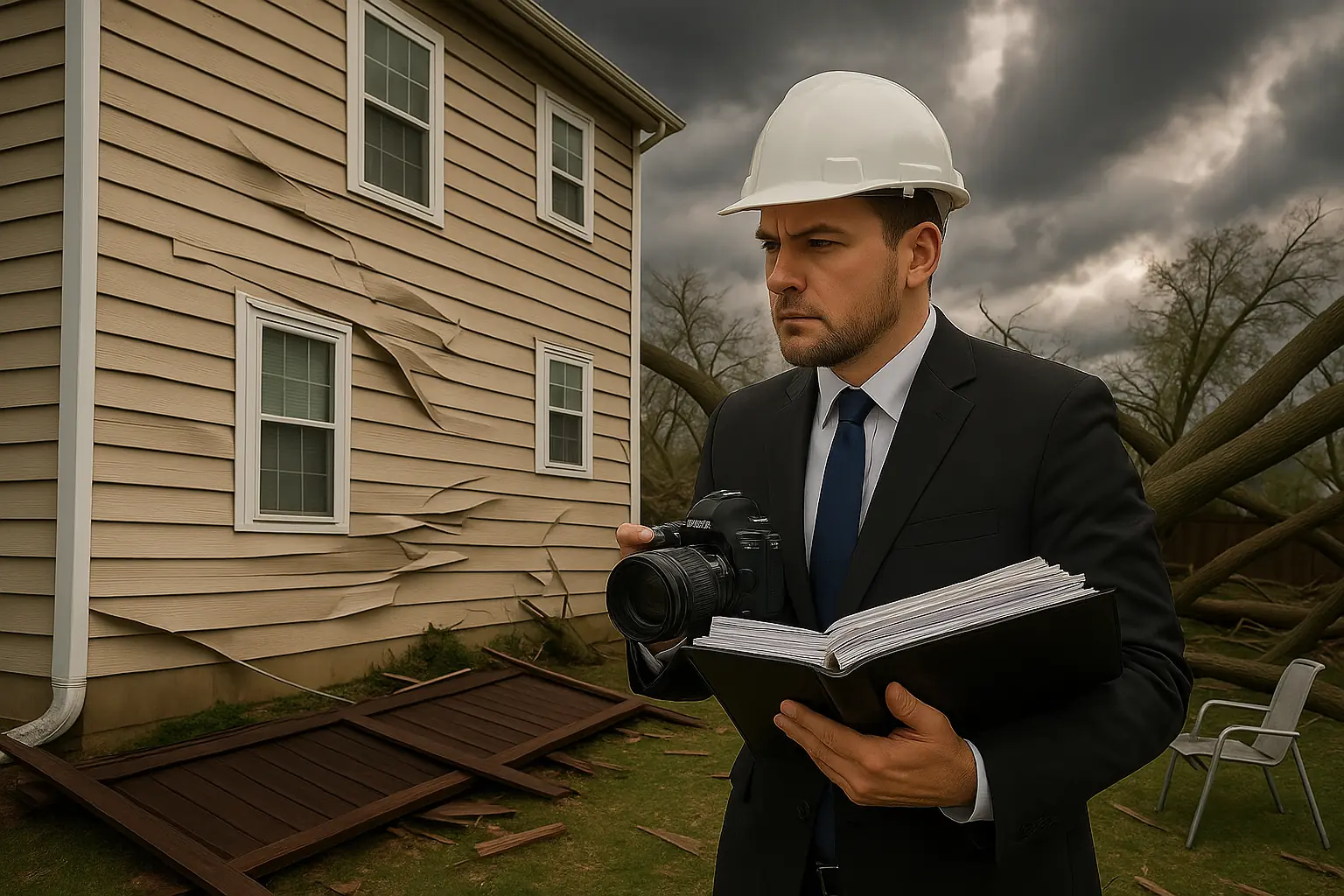
Your Insurance Company Paid. But Did They Pay Enough?
If your insurance settlement does not cover the actual cost of repairs, your claim was underpaid. We review it for free and fight for every dollar you are owed.
7 Signs Your Insurance Claim Was Underpaid
Most policyholders do not realize their claim was underpaid until they start getting repair estimates. Here are the most common warning signs:
Settlement Does Not Cover Repairs
Your contractor's estimate is significantly higher than what the insurance company paid. The gap can be thousands or tens of thousands of dollars.
Rooms or Areas Were Missed
The adjuster's report does not include all damaged rooms or areas. Closets, hallways, secondary bathrooms, and attic spaces are frequently overlooked.
Excessive Depreciation Applied
The insurance company depreciated materials and labor beyond what is reasonable, reducing your payout. Depreciation should reflect actual age and condition, not arbitrary percentages.
Line Items Are Missing
The estimate does not include all necessary repairs , missing items like paint, trim, texture matching, appliance reconnection, or code-required upgrades.
Unit Prices Are Below Market
The insurance company used pricing that is below the actual cost of labor and materials in your area. Xactimate pricing should reflect local market rates.
Matching Was Denied
The insurer paid to replace damaged materials in one area but refused to pay for matching in adjacent areas, leaving your home with mismatched flooring, paint, or cabinets.
Code Upgrades Were Excluded
Building code requires upgrades during repairs (electrical, plumbing, structural), but the insurance company refused to include them in the estimate.
Why Insurance Companies Underpay Claims
Insurance companies are businesses. Their revenue comes from premiums. Their profit comes from the difference between what they collect in premiums and what they pay out in claims. Every dollar they do not pay on your claim is a dollar of profit.
This does not mean your adjuster is dishonest. Most insurance company adjusters are working under significant time pressure, handling dozens of claims simultaneously, and following company guidelines that prioritize efficiency over thoroughness. The result is claims that are scoped too quickly, estimated too conservatively, and settled too cheaply.
Common tactics that lead to underpayment include:
- Inspecting after repairs or drying have begun, when visible damage has been reduced
- Using unit prices below local market rates in their estimates
- Omitting overhead and profit margins that contractors require
- Applying excessive depreciation to reduce the initial payout
- Classifying damage as cosmetic rather than structural
- Denying matching requirements for adjacent undamaged areas
- Excluding code-required upgrades from repair estimates
"The insurance company has a team of professionals working to minimize your claim. You deserve a team working to maximize it. That is what we do."
- Joshua Osteen, Licensed Public Adjuster
Your Options When a Claim Is Underpaid
You are not required to accept the insurance company's first offer. Here are the paths available to you:
Supplemental Claim
We prepare a detailed supplemental estimate documenting all damage that was missed or undervalued, and submit it to the insurance company with supporting evidence. This is the most common approach and is often sufficient to recover significant additional funds.
Appraisal Process
If the insurance company does not agree to pay the supplemental, we invoke the appraisal clause in your policy. Each side selects an appraiser, and a neutral umpire is selected. Any two of the three reach a binding decision on the amount owed.
Attorney Referral
If the insurance company acts in bad faith , unreasonably delaying, denying, or underpaying your claim , we refer you to experienced insurance litigation attorneys in our network who handle bad faith lawsuits on contingency.
How DCS Recovers Underpaid Claims
We re-inspect your property using professional equipment including moisture meters, thermal imaging, and Xactimate estimating software to document every item of damage.
We review the insurance company's estimate line by line and identify everything that was missed, underpriced, or improperly depreciated.
We prepare a comprehensive supplemental claim with photographs, measurements, and a detailed Xactimate estimate that meets industry documentation standards.
We negotiate directly with the insurance company adjuster, presenting evidence and policy language to support the full amount owed.
If negotiation fails, we invoke the appraisal process and serve as your appraiser , leveraging our insider knowledge of how claims are evaluated.
We work on contingency. Our fee is a percentage of the additional funds we recover. No recovery, no fee.
Frequently Asked Questions
Think Your Claim Was Underpaid? Let Us Review It , Free.
Send us your insurance company's estimate and settlement letter. We will review it at no cost and tell you exactly what was missed. No recovery, no fee.