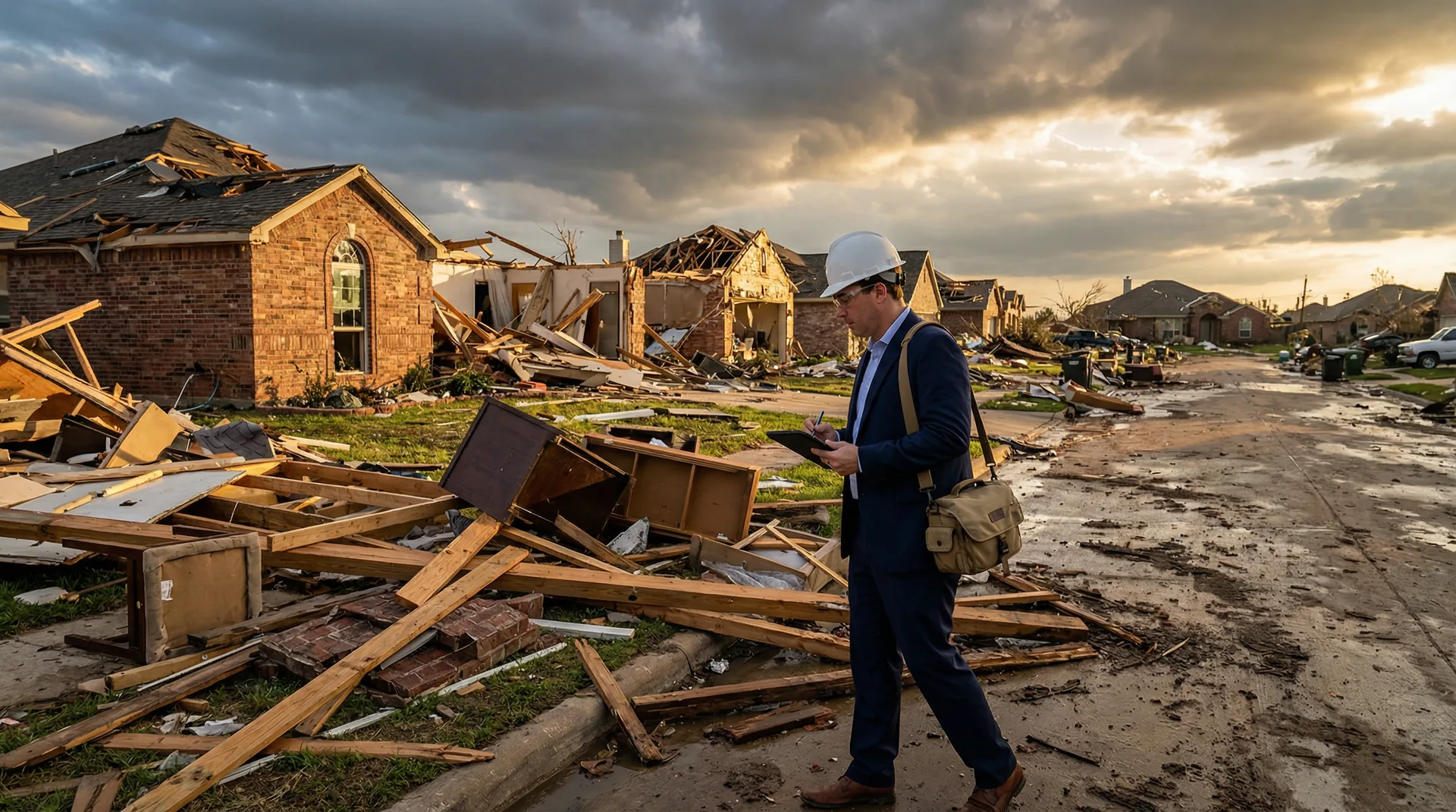
Tornado Damage Claims That Account for Everything a Tornado Takes
Tornadoes can destroy a home in seconds. We document every aspect of the damage to ensure your recovery is complete.
Tornado Damage Requires a Systematic, Comprehensive Documentation Approach
A tornado can cause catastrophic damage ranging from partial roof loss to complete structural destruction. The damage is rarely limited to the obvious visible destruction. Debris impact, pressure changes, and wind uplift affect structural components, windows, doors, and mechanical systems throughout the property.
Tornado claims often involve total loss or near-total loss scenarios that require careful documentation of the replacement cost of the entire structure and its contents. We work methodically through every aspect of the damage to ensure your claim reflects the true cost of rebuilding.
Common Damage Types We Document
- Structural Damage: Roof system loss, wall damage, foundation damage, and structural frame compromise from wind forces
- Debris Impact Damage: Damage from flying debris including broken windows, punctured walls, and damaged mechanical systems
- Interior Damage: Rain intrusion through damaged roof and walls causing extensive interior water damage
- Contents and Personal Property: Furniture, electronics, clothing, and personal belongings damaged or destroyed
- Mechanical and Electrical Systems: HVAC, electrical, and plumbing systems damaged by structural movement or debris impact
- Additional Living Expenses: Costs of temporary housing and living expenses while the home is uninhabitable
The Enhanced Fujita Scale: Understanding Tornado Intensity and Expected Damage
The Enhanced Fujita (EF) Scale rates tornado intensity based on the damage caused to structures and vegetation. Understanding the scale helps set expectations for the type and extent of damage at each intensity level.
The Enhanced Fujita Scale was developed in 2007 to replace the original Fujita Scale. It rates tornadoes from EF0 (weakest) to EF5 (strongest) based on the damage observed to 28 damage indicators including one and two-family residences, commercial buildings, and trees. The scale provides a framework for understanding what type of structural damage is expected at each wind speed range.
EF0 tornadoes (65-85 mph) cause minor damage including broken branches, shallow-rooted trees pushed over, and damage to gutters and roof surfaces. EF1 tornadoes (86-110 mph) cause moderate damage including roof surfaces peeled off, mobile homes overturned, and windows broken. EF2 tornadoes (111-135 mph) cause considerable damage including roofs torn off well-constructed homes, mobile homes demolished, and large trees snapped or uprooted.
EF3 tornadoes (136-165 mph) cause severe damage including entire stories of well-constructed homes destroyed, severe damage to large buildings, and trains overturned. EF4 tornadoes (166-200 mph) cause devastating damage including well-constructed homes leveled, cars thrown, and large missiles generated. EF5 tornadoes (over 200 mph) cause incredible damage including strong frame homes swept away and reinforced concrete structures damaged.
Texas experiences more tornadoes than any other state, averaging approximately 140 per year. The area known as Tornado Alley extends through the Texas Panhandle and North Texas, but significant tornadoes have occurred throughout the state including the Houston metropolitan area. Common ways tornado claims are minimized include applying wind exclusions to debris impact damage, disputing the cause of interior water damage, and undervaluing contents in total loss scenarios.
What You Need to Know
Replacement Cost vs. Actual Cash Value in Total Loss Claims
In a total loss or near-total loss scenario, the difference between replacement cost and actual cash value can be enormous. Replacement cost pays what it costs to rebuild with new materials. Actual cash value deducts depreciation. Most homeowner policies provide replacement cost coverage for the dwelling but may apply ACV to personal property. We ensure the correct valuation method is applied.
Additional Living Expenses Coverage
If your home is uninhabitable due to tornado damage, your policy likely provides Additional Living Expenses (ALE) coverage for temporary housing, increased food costs, and other necessary expenses above your normal living costs. We document and maximize your ALE claim for the full period your home is uninhabitable.
Debris Removal Coverage
The cost of removing tornado debris from your property is typically covered under your homeowner policy. This can be a significant expense after a major tornado. We ensure debris removal costs are included in your claim.
Tips That Protect Your Claim
Document Everything Before Cleanup
Photograph the full extent of damage from multiple angles before any debris removal or temporary repairs begin. Aerial photos from a drone can be valuable for documenting roof damage.
Inventory All Damaged Contents
Create a written and photographic inventory of every damaged or destroyed item. Include the item description, approximate age, and estimated replacement cost.
Make Temporary Repairs to Prevent Further Damage
Cover damaged roof areas with tarps and board up broken windows to prevent rain intrusion. Document all temporary repairs with photos and keep all receipts.
Do Not Allow Permanent Repairs Before the Adjuster Inspects
Permanent repairs should not begin until the insurance adjuster has completed the inspection and the scope of damage is agreed upon.
Document the Tornado Path and Rating
Obtain information about the tornado path and EF rating from the National Weather Service. This documentation supports your claim.
Contact DCS PIA Before the Adjuster Arrives
In major tornado events, insurance companies deploy large numbers of adjusters handling high claim volumes. Having your own representative ensures your claim gets the attention it deserves.
How to Reduce Your Risk
Know the difference between a tornado watch (conditions favorable) and a tornado warning (tornado spotted or indicated by radar). A warning means take shelter immediately.
Identify a safe room in your home: an interior room on the lowest floor, away from windows, such as a bathroom, closet, or under a staircase.
Consider installing a FEMA-compliant safe room or storm shelter if you are in a tornado-prone area.
Keep a weather radio with battery backup and sign up for local emergency alerts.
Secure outdoor furniture and objects that could become projectiles in high winds.
Have your roof inspected annually and ensure it is properly fastened to the wall framing with hurricane straps or clips.
Keep trees near the home trimmed to reduce the risk of falling branches.
Review your insurance policy annually to ensure your dwelling coverage reflects the current replacement cost of your home.
Critical: Protect Your Claim Before Starting Any Repairs
Do not begin full repairs until your claim is fully settled. Damage is evidence. Altering or removing it before your insurer has properly documented it can eliminate coverage entirely. Insurance companies only pay for what can be proven. Only perform emergency repairs necessary to prevent further damage, and document everything with photos and video before touching anything.
What to Do Right Now
Ensure Everyone Is Safe
Account for all family members and pets. Do not re-enter the home until it has been declared structurally safe.
Document Before Any Cleanup
Photograph the full extent of damage from every angle before debris removal or temporary repairs begin.
Make Emergency Temporary Repairs
Cover damaged roof areas with tarps and board up broken windows to prevent further damage. Document all temporary repairs.
Inventory All Damaged Contents
List and photograph every damaged or destroyed item before disposal.
Report the Claim to Your Insurer
Notify your insurance company as soon as possible. Obtain the claim number and adjuster name.
Contact DCS PIA Before the Adjuster Arrives
We will document the full scope of structural and contents damage and ensure your claim reflects the true cost of rebuilding.
Do Not Accept a Settlement Without Review
Tornado claims, especially total loss claims, are complex. Review any settlement offer with us before accepting.
Only a Fool Represents Themselves
Tornado damage claims are among the most complex in residential insurance. Total loss scenarios require careful valuation. Debris impact damage is sometimes misclassified. Contents inventories are enormous and time-consuming. Without professional representation, policyholders in major tornado events routinely receive settlements that do not reflect the full cost of rebuilding.
In major tornado events, insurance companies deploy adjusters handling large claim volumes. Your claim may not receive the thorough inspection it deserves without your own representative.
Total loss valuations require detailed replacement cost estimates. We ensure the estimate reflects current construction costs, not outdated figures.
Contents inventories in tornado claims are extensive. We work systematically to document every item and ensure nothing is missed.
Additional Living Expenses claims require ongoing documentation. We manage this process for the full period your home is uninhabitable.
Debris removal costs are frequently omitted from initial estimates. We ensure they are included.
The insurance company has a team of professionals working for them. You deserve one working for you.
Get a Licensed Public Adjuster on Your SideWhy Policyholders Trust DCS PIA
We bring insider knowledge, construction expertise, and genuine care to every claim.
We have handled tornado damage claims from major Texas tornado events and know the common scope disputes and documentation requirements.
We work on contingency. No recovery means no fee.
Our construction background gives us a detailed understanding of structural repair and replacement costs.
We manage the entire claims process from initial documentation through final settlement.
We handle Additional Living Expenses documentation and management for the full period of displacement.
Frequently Asked Questions
Related Claim Types
Ready to Get What Your Policy Owes You?
Schedule a free, no-obligation consultation with a licensed public adjuster today. No recovery, no fee. No risk to you.