Theft Claims That Account for Everything That Was Taken
A thorough theft claim requires a complete inventory of every stolen item with accurate values. We help you build that inventory and fight for your full recovery.
What You Document Is What You Recover. We Help You Document Everything.
Theft claims are personal property claims at their core. The settlement you receive depends directly on the completeness and accuracy of your stolen items inventory. Items that are not documented are not paid. Values that are underestimated result in underpayment. The process of building a complete inventory after a traumatic theft event is stressful and time-consuming, and most people miss items.
We work with you systematically to build a complete inventory of every stolen item, establish the correct value for each item, and present the claim in a way that maximizes your recovery under your policy.
Common Damage Types We Document
- Electronics and Technology: Televisions, computers, tablets, phones, gaming systems, cameras, and smart home devices
- Jewelry and Valuables: Jewelry, watches, collectibles, artwork, and other high-value items
- Tools and Equipment: Power tools, hand tools, lawn equipment, and sporting goods
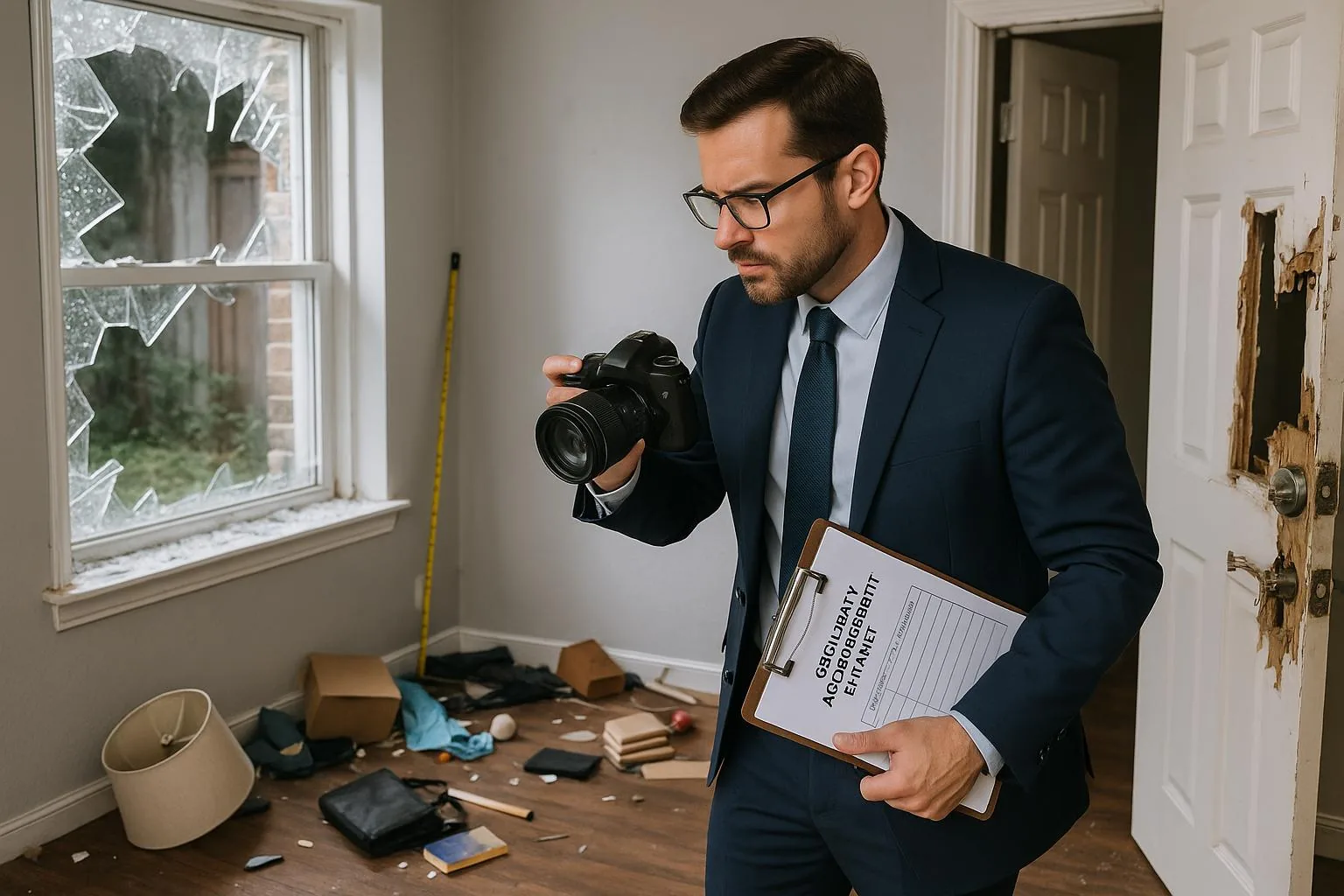
- Structural Damage from Break-In: Damaged doors, windows, locks, and frames from forced entry
- Firearms: Stolen firearms subject to specific policy limits and documentation requirements
- Cash and Financial Items: Cash, gift cards, and financial documents subject to specific policy limits
Understanding Theft Coverage: Limits, Sublimits, and What Your Policy Actually Covers
Theft coverage under a homeowner policy has important limitations that many policyholders do not discover until after a loss. Understanding these limitations before a theft occurs is the best way to ensure you have adequate coverage.
Standard homeowner policies cover theft of personal property up to the personal property coverage limit, typically 50-70% of the dwelling coverage. However, specific categories of property are subject to sublimits that are much lower than the full personal property limit. These sublimits apply regardless of the total personal property coverage.
Common sublimits include jewelry and watches (typically $1,500 per occurrence), firearms (typically $2,500), silverware and goldware (typically $2,500), cash and gift cards (typically $200-$500), and business property (typically $2,500). If you own valuable jewelry, firearms, or other high-value items, a scheduled personal property endorsement or a separate floater policy can provide full replacement cost coverage for those specific items.
The valuation method for stolen personal property depends on your policy. Replacement cost policies pay what it costs to replace the item with a new item of like kind and quality. Actual cash value policies deduct depreciation based on the age and condition of the item. The difference can be substantial for electronics and other items that depreciate quickly.
Common ways theft claims are minimized include applying sublimits to limit recovery for jewelry and other high-value items, applying aggressive depreciation under ACV policies, disputing the value of items without receipts or documentation, and questioning whether items were actually stolen versus misplaced. We document every item with as much supporting evidence as possible and challenge improper valuation methods.
What You Need to Know
Scheduled Personal Property Endorsements
If you own valuable jewelry, artwork, collectibles, musical instruments, or other high-value items, a scheduled personal property endorsement provides full replacement cost coverage for those specific items without sublimits. We recommend reviewing your policy limits and considering scheduled coverage for any item that exceeds the applicable sublimit.
Documentation After a Theft
The police report is the foundation of a theft claim. File a police report immediately after discovering the theft. Provide the officer with as complete a list of stolen items as you can compile at that time. You can supplement the report later as you identify additional missing items.
Replacement Cost vs. Actual Cash Value for Personal Property
If your policy provides replacement cost coverage for personal property, you are entitled to the cost of replacing each stolen item with a new item of like kind and quality, without depreciation. If your policy provides ACV coverage, depreciation is applied. We review your policy and ensure the correct valuation method is applied to every item.
Tips That Protect Your Claim
File a Police Report Immediately
File a police report as soon as you discover the theft. The police report is required by your insurer and is the foundation of your claim.
Document Every Missing Item
Go through every room and every storage area systematically to identify all missing items. Do not rush this process. Take your time and be thorough.
Photograph the Break-In Damage
Photograph all damage from the forced entry including damaged doors, windows, locks, and frames before any repairs are made.
Gather Supporting Documentation
Collect receipts, credit card statements, photos, serial numbers, and any other documentation that supports the existence and value of stolen items.
Check Your Sublimits Before Filing
Review your policy for sublimits on jewelry, firearms, cash, and other high-value categories before finalizing your inventory.
Contact DCS PIA Before Finalizing Your Inventory
We help you build a complete, accurate inventory and ensure you are not leaving items or value on the table.
How to Reduce Your Risk
Install a monitored security system with door and window sensors, motion detectors, and cameras.
Use high-quality deadbolt locks on all exterior doors. Reinforce door frames with strike plate reinforcement kits.
Install security cameras at all entry points and store footage in the cloud.
Do not leave valuables visible in parked vehicles.
Keep a home inventory with photos, serial numbers, and receipts for all major items. Store this in the cloud.
Consider a home safe for jewelry, cash, and important documents.
Get to know your neighbors and participate in neighborhood watch programs.
Review your insurance policy annually to ensure your personal property coverage and sublimits are adequate for your current possessions.
Critical: Protect Your Claim Before Starting Any Repairs
Do not begin full repairs until your claim is fully settled. Damage is evidence. Altering or removing it before your insurer has properly documented it can eliminate coverage entirely. Insurance companies only pay for what can be proven. Only perform emergency repairs necessary to prevent further damage, and document everything with photos and video before touching anything.
What to Do Right Now
Call the Police
Call 911 and file a police report. Do not touch or disturb anything until the police have responded.
Document the Break-In Damage
Photograph all damage from the forced entry before any repairs are made.
Compile a Complete Inventory
Go through every room and storage area systematically to identify all missing items. Take your time.
Gather Supporting Documentation
Collect receipts, photos, serial numbers, and any other documentation for stolen items.
Report the Claim to Your Insurer
Notify your insurance company promptly. Provide the police report number.
Contact DCS PIA Before Finalizing Your Inventory
We help you build a complete, accurate inventory and ensure you maximize your recovery.
Do Not Accept a Settlement Without Review
Theft claims are frequently settled for less than the full value of stolen items. Review any settlement offer with us before accepting.
Only a Fool Represents Themselves
Theft claims are personal property claims that depend entirely on the completeness and accuracy of the stolen items inventory. Most policyholders miss items, undervalue what they do document, and do not know about sublimits until it is too late. Professional representation ensures a complete inventory, correct valuation, and maximum recovery.
Most theft victims miss items in their initial inventory. We work systematically to ensure nothing is overlooked.
Sublimits on jewelry, firearms, and other high-value items must be identified and addressed in the claim strategy.
Valuation disputes are common. We document the value of every item with market data and challenge improper depreciation.
Break-in damage to doors, windows, and locks is frequently omitted from theft claim estimates. We include all structural damage.
The emotional stress of a theft makes it difficult to think clearly about the claim process. We handle the process so you can focus on recovery.
The insurance company has a team of professionals working for them. You deserve one working for you.
Get a Licensed Public Adjuster on Your SideWhy Policyholders Trust DCS PIA
We bring insider knowledge, construction expertise, and genuine care to every claim.
We work systematically with theft victims to build complete, accurate stolen items inventories.
We know the sublimits and valuation rules that apply to theft claims and ensure they are applied correctly.
We work on contingency. No recovery means no fee.
We handle all communication with the insurer to ensure your claim is properly supported.
We have handled theft claims across Texas and Florida and know the common disputes and documentation requirements.
Frequently Asked Questions
Related Claim Types
Ready to Get What Your Policy Owes You?
Schedule a free, no-obligation consultation with a licensed public adjuster today. No recovery, no fee. No risk to you.