Storm and Wind Damage Claims Built on Evidence, Not Estimates
Wind damage is one of the most disputed perils in homeowner insurance. We document every damaged component and build the case for your full recovery.
Wind Damage Is Covered. Proving the Extent of It Is Where the Work Begins.
Wind damage from storms, severe thunderstorms, and straight-line winds is a covered peril under virtually all homeowner policies. However, the extent of covered damage is frequently disputed. Insurance companies often argue that damaged roofing materials, siding, and gutters were already deteriorated and that the storm only affected a limited area.
We document wind damage with weather data, engineering principles, and construction expertise. We establish the wind speeds at your property during the storm, document the pattern of damage consistent with wind forces, and build the evidentiary record that supports payment for all covered damage.
Common Damage Types We Document
- Roof Damage: Missing shingles, lifted flashing, damaged ridge caps, and compromised roof deck from wind uplift
- Siding and Exterior Damage: Cracked, dented, or missing siding, damaged trim, and compromised exterior cladding
- Window and Door Damage: Broken windows, damaged frames, failed seals, and compromised door systems from wind pressure
- Fence and Outbuilding Damage: Downed fences, damaged detached garages, sheds, and other outbuildings
- Interior Water Damage: Water intrusion through wind-damaged roof and exterior causing interior damage
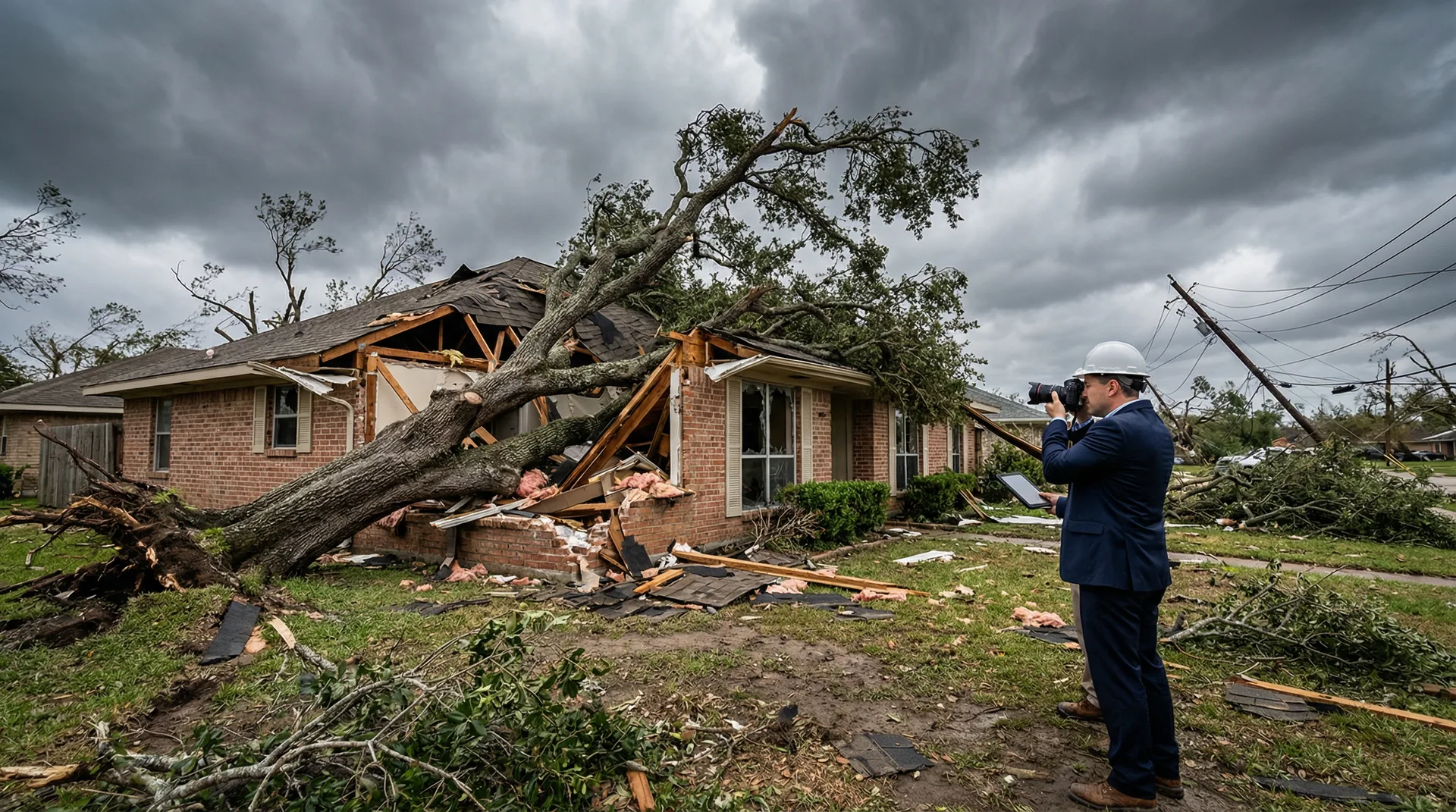
- Tree and Debris Impact: Structural damage from fallen trees and wind-driven debris
How Wind Forces Damage Structures: The Science Behind Wind Damage Claims
Understanding how wind forces act on a structure helps explain the pattern of wind damage and why certain types of damage are consistent with a wind event rather than pre-existing deterioration.
Wind creates both positive pressure (pushing) on windward surfaces and negative pressure (suction) on leeward surfaces and roof surfaces. The suction effect on roof surfaces is often more damaging than the direct push. Wind uplift forces act on the underside of roof overhangs and can peel roofing materials from the deck even when the wind is not blowing directly onto the roof surface.
Roofing materials have rated wind resistance values. Standard three-tab asphalt shingles are typically rated for winds up to 60-70 mph. Architectural shingles are typically rated for 80-130 mph depending on the product. When wind speeds exceed the rated resistance of the installed materials, damage is expected and covered. We document the wind speeds at your property and compare them to the rated resistance of your roofing system.
The pattern of wind damage is diagnostic. Wind damage typically shows a directional pattern consistent with the prevailing wind direction during the storm. Missing shingles, lifted flashing, and damaged ridge caps on the windward side of the roof are consistent with wind uplift. Random missing shingles across the entire roof surface may indicate a different cause. We analyze the damage pattern in the context of the storm data.
Common ways wind damage claims are minimized include arguing that damaged shingles were already deteriorated before the storm, limiting the scope to only the areas where shingles are visibly missing, applying matching limitations to prevent replacement of undamaged shingles that cannot be matched, and disputing the wind speeds at the property. We address each of these arguments with documentation and expertise.
What You Need to Know
The Matching Problem in Wind Damage Claims
When wind damages a portion of a roof or siding, the damaged materials often cannot be matched exactly with new materials due to weathering, discontinued product lines, or color variations. Many states have matching laws or regulations that require insurers to pay for replacement of undamaged materials when a match cannot be achieved. We know the applicable rules in Texas and Florida and apply them to your claim.
Wind-Driven Rain vs. Flood
Water that enters your home through a wind-damaged opening (such as a broken window or damaged roof) is typically covered as wind-driven rain under your homeowner policy. Water that enters from the ground up due to flooding requires a separate flood policy. The distinction matters enormously and is sometimes disputed. We document the source of water intrusion.
Ordinance or Law Coverage
When repairing wind damage, building codes may require upgrades to bring the repaired area into compliance with current standards. For example, a roof repair may require upgraded underlayment or ice and water shield. Ordinance or Law coverage pays for these required upgrades. We ensure this coverage is utilized when applicable.
Cosmetic Damage Endorsements and Wind Claims
Some policies contain a cosmetic damage endorsement that limits coverage to damage impairing the function of a material, excluding damage that affects only appearance. Insurers sometimes invoke this endorsement on wind claims involving dented gutters, bent siding, or scuffed surfaces. However, the endorsement is frequently misapplied. Wind damage that compromises the waterproofing of a surface, allows air infiltration, prevents proper drainage, or structurally weakens a component is functional damage -- not cosmetic. If an insurer invokes a cosmetic damage endorsement to reduce your wind claim, we document the functional impairment and challenge the classification.
Tips That Protect Your Claim
Document Damage Immediately After the Storm
Photograph all visible damage from the ground and, if safe, from the roof. Document the date and time of your photos.
Make Temporary Repairs to Prevent Further Damage
Cover damaged roof areas with tarps and board up broken windows. Document all temporary repairs with photos and keep all receipts.
Do Not Allow Permanent Repairs Before Inspection
Permanent repairs should not begin until the insurance adjuster has inspected the damage. Premature repairs can complicate your claim.
Obtain Weather Data
Request weather station data or storm reports for your area on the date of the event. This documentation supports the cause of loss.
Report Promptly
Report the claim to your insurer as soon as possible after the storm. Delayed reporting can complicate your claim.
Contact DCS PIA Before the Adjuster Arrives
We will document the full scope of wind damage and ensure the adjuster does not limit the scope to only the most visible damage.
How to Reduce Your Risk
Have your roof inspected annually and after every major storm. Address any deteriorated flashing, cracked caulking, or loose shingles promptly.
Ensure your roof is properly fastened to the wall framing with hurricane straps or clips, especially in high-wind areas.
Consider impact-resistant roofing materials rated for higher wind speeds if you are in a hurricane or tornado-prone area.
Trim trees near the home regularly to reduce the risk of falling branches.
Secure outdoor furniture, decorations, and equipment before storms.
Inspect and maintain window and door seals and weatherstripping annually.
Ensure your garage door is rated for high winds. Garage door failure is a common cause of structural damage in wind events.
Review your insurance policy annually to ensure your dwelling coverage reflects the current replacement cost of your home.
Critical: Protect Your Claim Before Starting Any Repairs
Do not begin full repairs until your claim is fully settled. Damage is evidence. Altering or removing it before your insurer has properly documented it can eliminate coverage entirely. Insurance companies only pay for what can be proven. Only perform emergency repairs necessary to prevent further damage, and document everything with photos and video before touching anything.
What to Do Right Now
Document Damage Immediately
Photograph all visible damage from every angle before any cleanup or temporary repairs begin.
Make Temporary Repairs
Cover damaged roof areas with tarps and board up broken windows to prevent further damage. Document all temporary repairs.
Obtain Weather Data
Request weather station data or storm reports for your area on the date of the event.
Report the Claim to Your Insurer
Notify your insurance company promptly. Obtain the claim number and adjuster name.
Contact DCS PIA Before the Adjuster Arrives
We will document the full scope of wind damage and ensure nothing is missed.
Do Not Accept a Settlement Without Review
Wind damage claims are frequently underscoped. Review any settlement offer with us before accepting.
Only a Fool Represents Themselves
Wind damage claims are among the most disputed in residential insurance. The extent of covered damage, the application of matching requirements, the distinction between wind damage and pre-existing deterioration, and the use of Ordinance or Law coverage are all areas where professional representation makes a significant difference in the outcome.
Adjusters frequently limit wind damage scopes to only the most visibly damaged areas and miss damage to flashing, gutters, and structural components.
Matching requirements are often not applied without an advocate. We know the applicable rules and apply them to your claim.
Wind speed documentation is essential to establishing that the storm caused the damage. We obtain and present this data.
Ordinance or Law coverage is frequently not utilized in wind damage claims. We ensure it is applied when code upgrades are required.
Interior water damage from wind-driven rain is sometimes disputed or excluded. We document the source of water intrusion.
The insurance company has a team of professionals working for them. You deserve one working for you.
Get a Licensed Public Adjuster on Your SideWhy Policyholders Trust DCS PIA
We bring insider knowledge, construction expertise, and genuine care to every claim.
We have handled wind damage claims from major Texas and Florida storms and know the common scope disputes and insurer arguments.
We obtain and analyze weather data to document wind speeds at your property during the storm.
We work on contingency. No recovery means no fee.
Our construction background gives us a detailed understanding of roofing and exterior repair costs.
We know the matching laws and Ordinance or Law provisions applicable in Texas and Florida.
Frequently Asked Questions
Related Claim Types
Ready to Get What Your Policy Owes You?
Schedule a free, no-obligation consultation with a licensed public adjuster today. No recovery, no fee. No risk to you.