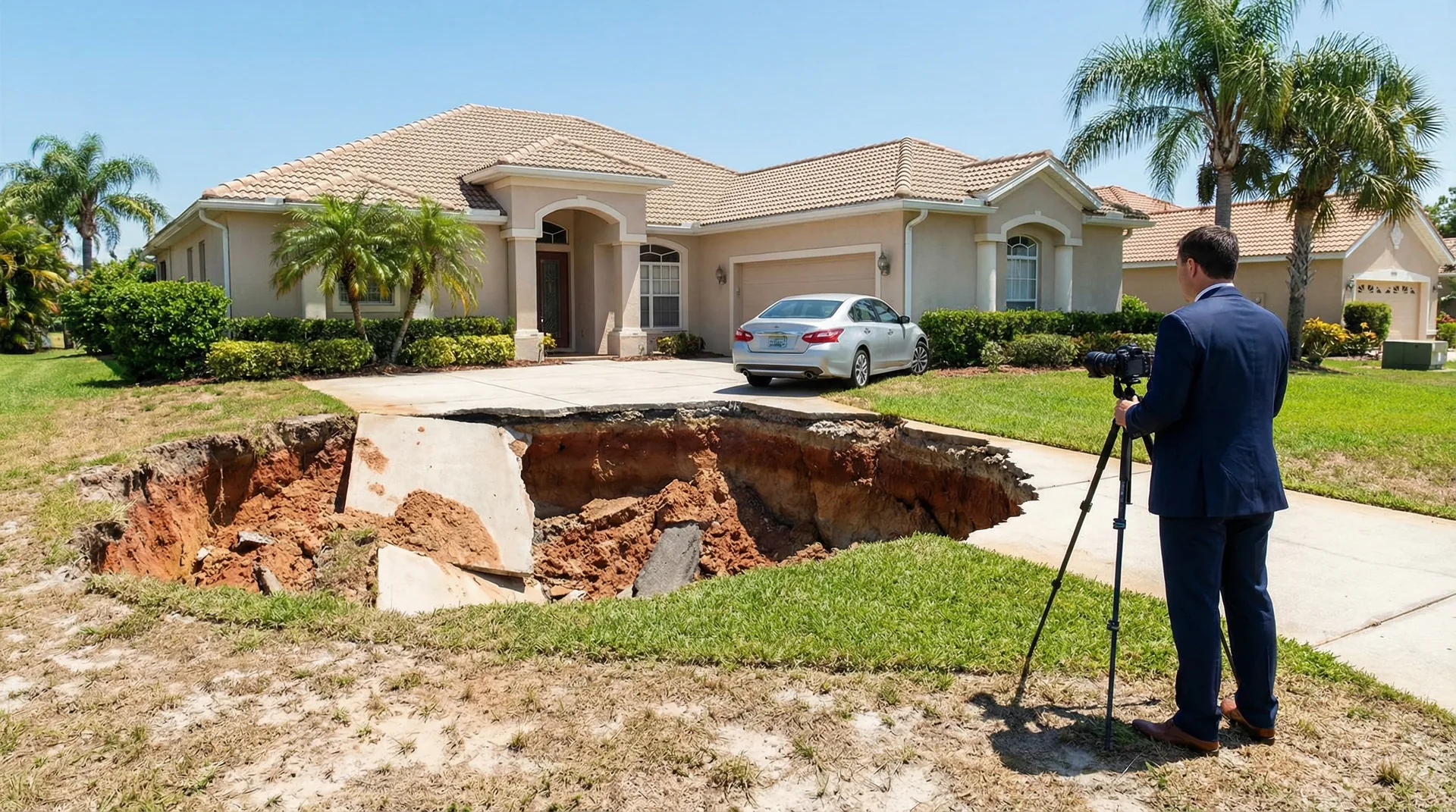
Sinkhole Damage Claims That Navigate the Most Complex Coverage in Property Insurance
Sinkhole claims require geological testing, engineering reports, and specialized policy knowledge. We manage the entire process.
Sinkhole Claims Are Among the Most Complex in Property Insurance. We Know the Process.
Sinkhole damage claims involve a unique combination of geological science, engineering assessment, and specialized insurance policy provisions. Florida has specific statutory requirements for sinkhole coverage and testing. Texas has different rules. The process is complex, and without professional guidance, policyholders frequently receive inadequate settlements or outright denials.
We manage the sinkhole claim process from initial reporting through final settlement, ensuring that all required testing is conducted, all damage is documented, and all applicable coverage is utilized.
Common Damage Types We Document
- Foundation Damage: Cracks, settlement, and structural movement in the foundation caused by sinkhole activity
- Structural Damage: Cracks in walls, floors, and ceilings resulting from foundation movement
- Plumbing Damage: Broken pipes and sewer lines from ground movement
- Exterior Damage: Cracked driveways, walkways, and retaining walls from ground subsidence
- Catastrophic Ground Cover Collapse: Sudden, dramatic sinkhole formation causing immediate structural failure
- Sinkhole Activity: Gradual subsidence and ground movement that causes progressive structural damage
How Sinkholes Form and Why They Are Particularly Common in Florida
Understanding sinkhole geology helps explain why certain areas are more susceptible and what types of damage are expected from sinkhole activity.
Sinkholes form when water dissolves soluble rock (primarily limestone and dolomite) beneath the surface, creating voids. When the overlying soil can no longer support the weight above, it collapses into the void. Florida sits on a thick platform of porous limestone, making it one of the most sinkhole-prone states in the country.
There are two primary types of sinkhole events relevant to insurance claims. Catastrophic ground cover collapse is a sudden, dramatic event where the ground surface collapses abruptly, creating a visible hole. This type of event is covered under virtually all Florida homeowner policies. Sinkhole activity is a more gradual process of subsidence and ground movement that causes progressive structural damage over time. Coverage for sinkhole activity varies by policy and state.
Florida law (Section 627.706, Florida Statutes) requires all residential property insurers to offer sinkhole coverage as an optional endorsement. The law also specifies the testing requirements for sinkhole claims, including the use of Standard Penetration Testing (SPT) and other geological investigation methods. Texas does not have the same statutory framework, and sinkhole coverage in Texas is more limited.
Common ways sinkhole claims are minimized include disputing whether the damage was caused by sinkhole activity versus other causes, arguing that the geological testing does not confirm sinkhole activity, limiting the repair scope to cosmetic repairs rather than full foundation remediation, and disputing the cost of sinkhole remediation methods such as grouting or underpinning.
What You Need to Know
The Difference Between Catastrophic Ground Cover Collapse and Sinkhole Activity
In Florida, catastrophic ground cover collapse is covered under all standard homeowner policies. Sinkhole activity coverage requires a specific endorsement. The distinction matters enormously. We review your policy to determine what coverage you have and how it applies to your specific loss.
The Sinkhole Testing Process
Florida law requires specific geological testing to confirm sinkhole activity. The insurer is required to hire a licensed professional engineer or geologist to conduct the investigation. We monitor the testing process and review the findings to ensure the investigation is thorough and the conclusions are supported by the evidence.
Sinkhole Remediation Methods
Sinkhole remediation typically involves either compaction grouting (injecting grout under pressure to fill voids and stabilize the soil) or underpinning (installing piers or pilings to support the foundation). The appropriate method depends on the specific geological conditions. We ensure the repair scope includes the appropriate remediation method and all required structural repairs.
Tips That Protect Your Claim
Document All Cracks and Movement
Photograph all cracks in the foundation, walls, floors, and ceilings. Note the width and length of each crack. Monitor cracks over time to document progression.
Report Promptly
Report sinkhole damage to your insurer as soon as you notice signs of ground movement or structural cracking. Delayed reporting can complicate your claim.
Do Not Make Permanent Repairs Before Testing
Do not make permanent structural repairs before the geological testing is completed. Premature repairs can complicate the investigation and your claim.
Review Your Policy for Sinkhole Coverage
Check your policy to determine whether you have sinkhole activity coverage or only catastrophic ground cover collapse coverage.
Monitor and Document Crack Progression
Place crack monitors (simple paper or tape markers) across cracks and photograph them regularly to document progression.
Contact DCS PIA Before the Adjuster Arrives
We manage the sinkhole claim process from initial reporting through final settlement and ensure all required testing is conducted.
How to Reduce Your Risk
Have your property evaluated by a licensed geologist if you are in a sinkhole-prone area before purchasing.
Maintain proper drainage around your foundation to prevent water from pooling and accelerating dissolution of underlying rock.
Avoid over-watering landscaping near the foundation.
Have your plumbing inspected regularly. Leaking pipes can accelerate sinkhole development by introducing water into the soil.
Monitor your property for early signs of sinkhole activity: new cracks in walls or floors, doors or windows that suddenly stick, depressions in the yard, or turbid well water.
Review your insurance policy to ensure you have sinkhole activity coverage if you are in a high-risk area.
Consider a pre-purchase geological investigation if you are buying property in a sinkhole-prone area.
Critical: Protect Your Claim Before Starting Any Repairs
Do not begin full repairs until your claim is fully settled. Damage is evidence. Altering or removing it before your insurer has properly documented it can eliminate coverage entirely. Insurance companies only pay for what can be proven. Only perform emergency repairs necessary to prevent further damage, and document everything with photos and video before touching anything.
What to Do Right Now
Document All Damage
Photograph all cracks and structural movement from multiple angles.
Report the Claim to Your Insurer
Notify your insurance company promptly. Obtain the claim number and adjuster name.
Contact DCS PIA Before the Adjuster Arrives
We manage the sinkhole claim process and ensure all required testing is conducted.
Cooperate with the Geological Investigation
Allow the insurer-hired geologist to conduct the required testing. We monitor the process.
Review the Testing Results
We review the geological investigation findings and challenge any conclusions that are not supported by the evidence.
Do Not Accept a Settlement Without Review
Sinkhole claims are complex and frequently undervalued. Review any settlement offer with us before accepting.
Only a Fool Represents Themselves
Sinkhole claims are among the most complex in property insurance. They require geological expertise, knowledge of state-specific statutory requirements, and experience with the testing and remediation process. Without professional representation, policyholders frequently receive inadequate settlements or outright denials.
We know the Florida statutory requirements for sinkhole coverage and testing and ensure they are followed.
We monitor the geological investigation process to ensure it is thorough and the conclusions are supported by the evidence.
We ensure the repair scope includes the appropriate remediation method and all required structural repairs.
We work on contingency. No recovery means no fee.
We have handled sinkhole claims in Florida and know the common disputes and documentation requirements.
The insurance company has a team of professionals working for them. You deserve one working for you.
Get a Licensed Public Adjuster on Your SideWhy Policyholders Trust DCS PIA
We bring insider knowledge, construction expertise, and genuine care to every claim.
We manage the sinkhole claim process from initial reporting through final settlement.
We know the Florida statutory requirements for sinkhole coverage and testing.
We work on contingency. No recovery means no fee.
We monitor the geological investigation process and challenge findings that are not supported by the evidence.
We ensure the repair scope includes all required remediation and structural repairs.
Frequently Asked Questions
Related Claim Types
Ready to Get What Your Policy Owes You?
Schedule a free, no-obligation consultation with a licensed public adjuster today. No recovery, no fee. No risk to you.