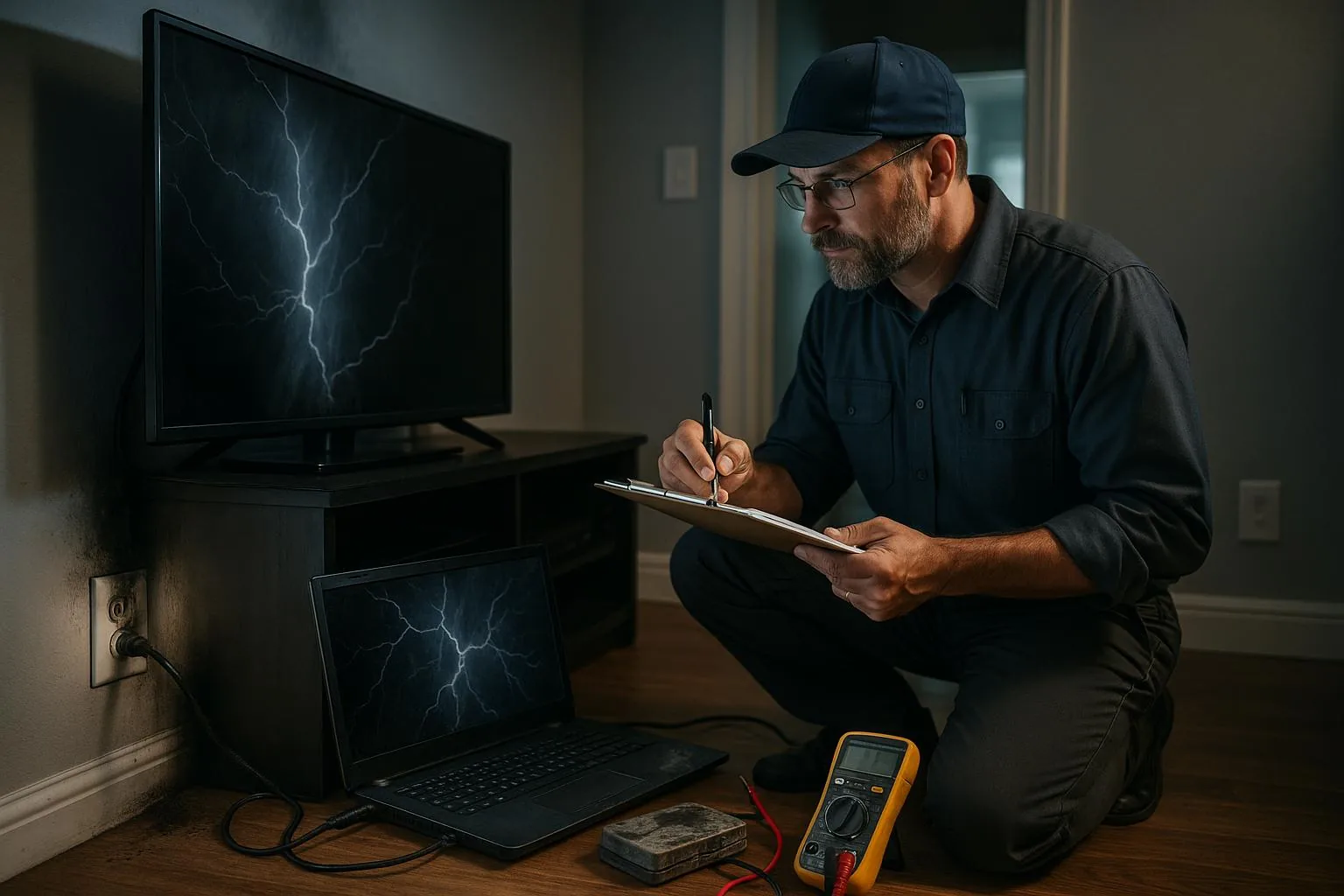
Lightning Damage Claims That Find Every Affected System
A single lightning strike can travel through your entire electrical system and damage appliances, electronics, and structural components throughout the home.
Lightning Damage Is Rarely Limited to the Strike Point
When lightning strikes a home or the ground nearby, the electrical surge travels through every conductive path it can find. This includes your electrical wiring, plumbing, cable and phone lines, and any appliance or electronic device connected to those systems. The visible damage at the strike point, such as a scorched roof or shattered tree, is often the least expensive part of the claim.
The hidden damage to electrical systems, appliances, HVAC equipment, and structural components is where the real cost lies. We inspect every system in the home and document all damage caused by the lightning event, not just what is visible on the surface.
Common Damage Types We Document
- Electrical System Damage: Damaged wiring, breakers, panels, outlets, and fixtures throughout the home
- Appliance and Electronics Damage: Refrigerators, ovens, washers, dryers, televisions, computers, and smart home devices
- HVAC System Damage: Air handlers, compressors, thermostats, and control boards damaged by electrical surge
- Structural Damage: Roof damage, chimney damage, and structural damage at the strike point
- Plumbing System Damage: Damage to water heaters, pumps, and fixtures connected to grounded plumbing
- Fire Risk: Lightning strikes can ignite fires in attics, walls, and structural cavities that may not be immediately visible
The Physics of Lightning: How a Strike Damages an Entire Home
Lightning is one of the most powerful forces in nature. Understanding how it behaves when it strikes a structure explains why the damage is so extensive and why a thorough inspection of every system is essential.
A lightning bolt carries an enormous amount of electrical energy in an extremely short time. When it strikes a home, the energy must find a path to ground. It travels through any conductive material available, including electrical wiring, plumbing pipes, cable and telephone lines, and structural metal components. The surge travels at the speed of light through these pathways, overwhelming the capacity of any device connected to them.
Surge protectors and circuit breakers are designed to handle normal electrical fluctuations. A direct or nearby lightning strike produces a surge that is orders of magnitude beyond what these devices are designed to handle. A whole-house surge protector reduces but does not eliminate the risk. Even a nearby strike that does not directly hit the home can induce a damaging surge through the power lines serving the property.
Fire is a serious secondary risk from lightning. The enormous heat of the strike can ignite wood framing, insulation, and other combustible materials in the attic or within wall cavities. These fires can smolder for hours before becoming visible. After any lightning strike, the attic and all accessible wall cavities should be inspected for signs of fire or smoldering.
Common ways lightning claims are minimized include limiting the scope to only the visible strike point, excluding appliances and electronics that were not specifically listed in the claim, arguing that appliance failures were due to age rather than the lightning event, and disputing whether a nearby strike (rather than a direct strike) caused the damage. We document the lightning event with weather records and inspect every system to build a complete claim.
What You Need to Know
Direct Strike vs. Side Flash vs. Ground Current
Lightning can damage a home through a direct strike, a side flash (when lightning jumps from a struck object to a nearby structure), or ground current (when the electrical energy spreads outward through the ground from the strike point). All three can cause significant damage. We document the type of strike and how it affected the structure.
Appliance and Electronics Documentation
Insurance companies require documentation of damaged appliances and electronics. We photograph each affected item, document the model and serial number, and obtain repair or replacement estimates. For items that cannot be tested, we document the circumstances that support the conclusion that the lightning event caused the failure.
The Importance of a Licensed Electrician Inspection
After a lightning strike, a licensed electrician should inspect the entire electrical system before the home is reoccupied. Damaged wiring that is not replaced is a fire hazard. The cost of this inspection and any required electrical repairs is part of your insurance claim.
Tips That Protect Your Claim
Document the Strike Point Immediately
Photograph the visible strike point, any scorching, and all damaged items before any cleanup or repairs begin.
List Every Affected Appliance and Electronic
Go through every room and list every appliance, electronic, and device that was connected to power or cable at the time of the strike. Test each one and document which ones are not functioning.
Check the Attic for Fire
After a lightning strike, inspect the attic for signs of fire or smoldering. If you smell smoke or see any discoloration, call the fire department immediately.
Do Not Use the Electrical System Until Inspected
Have a licensed electrician inspect the entire electrical system before using it after a lightning strike. Damaged wiring is a fire and shock hazard.
Obtain Weather Records
Request weather records or lightning strike data for your address on the date of the event. This documentation supports the cause of loss.
Report Promptly
Report the claim to your insurer as soon as possible. Some policies have time limits for reporting lightning damage.
How to Reduce Your Risk
Install a whole-house surge protector at your electrical panel. This provides the first line of defense against lightning-induced surges.
Use point-of-use surge protectors for all valuable electronics and appliances.
Consider a lightning protection system (lightning rods and grounding cables) for your home if you are in a high-lightning area.
Unplug valuable electronics and appliances during severe thunderstorms when possible.
Install surge-protected power strips for home entertainment systems and computers.
Have your electrical panel inspected if your home is more than 20 years old. Older panels may not handle surges as well as modern equipment.
Keep trees trimmed away from the home to reduce the risk of a struck tree causing damage to the structure.
Install a battery backup for your sump pump to protect against flooding during power outages caused by lightning.
Critical: Protect Your Claim Before Starting Any Repairs
Do not begin full repairs until your claim is fully settled. Damage is evidence. Altering or removing it before your insurer has properly documented it can eliminate coverage entirely. Insurance companies only pay for what can be proven. Only perform emergency repairs necessary to prevent further damage, and document everything with photos and video before touching anything.
What to Do Right Now
Ensure Safety First
Do not touch any electrical equipment or wiring until the system has been inspected by a licensed electrician. Check for fire in the attic and walls.
Document the Strike Point and All Damage
Photograph the visible strike point, all scorching, and every appliance and electronic that was affected.
List Every Affected Device
Go room by room and list every appliance and electronic that was connected at the time of the strike. Test each one.
Have the Electrical System Inspected
Call a licensed electrician to inspect the entire electrical system before reoccupying the home.
Report the Claim to Your Insurer
Notify your insurance company promptly. Obtain the claim number and adjuster name.
Contact DCS PIA Before the Adjuster Arrives
We will document all affected systems and ensure the full scope of damage is included in your claim.
Do Not Accept a Settlement Without Review
Lightning claims are frequently scoped incompletely. Review any settlement offer with us before accepting.
Only a Fool Represents Themselves
Lightning damage claims are frequently undervalued because adjusters focus on the visible strike point and miss the extensive damage to electrical systems, appliances, and structural components throughout the home. Without a systematic inspection of every system, significant damage goes undocumented and unpaid.
Adjusters often limit the scope to the visible strike point and do not inspect every electrical circuit and appliance.
Appliance and electronics claims require detailed documentation. Without a complete inventory, items are missed.
Disputes about whether appliance failures were caused by the lightning event or by pre-existing age require evidence and expertise to resolve.
Attic and structural damage from lightning-ignited fires is frequently missed in initial inspections.
Electrical system repair costs are often underestimated in initial estimates. We ensure all required repairs are included.
The insurance company has a team of professionals working for them. You deserve one working for you.
Get a Licensed Public Adjuster on Your SideWhy Policyholders Trust DCS PIA
We bring insider knowledge, construction expertise, and genuine care to every claim.
We inspect every system in the home after a lightning event, not just the visible strike point.
We work with licensed electricians to document electrical system damage and ensure repair costs are complete.
We work on contingency. No recovery means no fee.
Our construction background gives us a detailed understanding of electrical system repair costs.
We have handled lightning damage claims across Texas and Florida and know the common scope disputes.
Frequently Asked Questions
Related Claim Types
Ready to Get What Your Policy Owes You?
Schedule a free, no-obligation consultation with a licensed public adjuster today. No recovery, no fee. No risk to you.