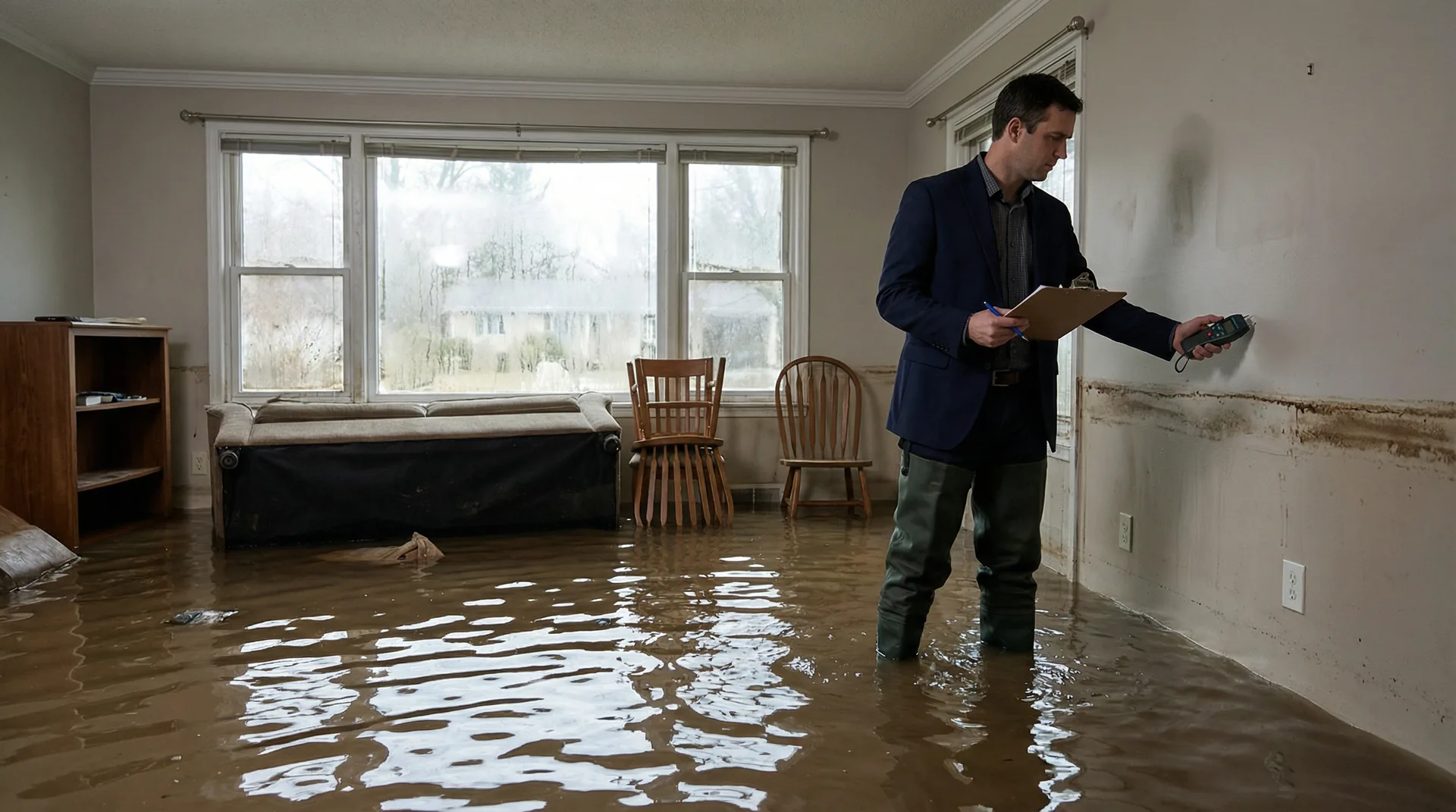
Flood Damage Claims That Maximize Every Dollar of Coverage
NFIP and private flood policies have strict deadlines, complex coverage rules, and significant limitations. We know how to navigate all of it.
Important: Call a Public Adjuster When You Call Your Mitigation Company
Flood mitigation is urgent , professional water extraction and drying must begin quickly to limit damage. At the same time, flood coverage is separate from homeowner insurance and not all flood events are covered under every policy.
Call DCS at the same time you call your mitigation company. We review your flood policy quickly to confirm coverage while the mitigation team begins emergency work. This protects you financially and ensures your NFIP or private flood claim is properly documented from day one.
Learn More: Water Mitigation and Your Insurance ClaimFlood Coverage Is Separate, Complex, and Frequently Underutilized
Flood damage is not covered by standard homeowner insurance. It requires a separate flood insurance policy, either through the National Flood Insurance Program (NFIP) administered by FEMA or through a private flood insurer. Many homeowners do not realize this until they are standing in several inches of water.
NFIP policies have strict coverage limits, specific exclusions, and proof of loss deadlines that are different from homeowner policies. Private flood policies vary significantly in their terms. We review your specific policy, document the full extent of flood damage, and ensure you receive the maximum recovery available under your coverage.
Common Damage Types We Document
- Structural Flood Damage: Foundation damage, wall and floor assembly saturation, and structural deterioration from floodwater
- Mechanical and Electrical Systems: Flood damage to HVAC, electrical panels, water heaters, and other mechanical systems
- Personal Property: Furniture, appliances, electronics, and personal belongings damaged by floodwater
- Contamination and Remediation: Floodwater from external sources is typically Category 3 contaminated water requiring specialized remediation
- Mold from Flooding: Mold growth resulting from floodwater that was not promptly and properly dried
- Debris and Sediment: Sediment, debris, and contaminants deposited by floodwater throughout the structure
Understanding Flood Risk: How Floods Form and Why They Cause Such Extensive Damage
Flooding is the most common and costly natural disaster in the United States. It can occur virtually anywhere, not just in designated high-risk flood zones. Understanding how floods form and the types of damage they cause helps explain why proper documentation is so critical to a complete flood claim.
Floods are caused by a variety of events including prolonged rainfall, rapid snowmelt, storm surge from hurricanes and tropical storms, dam or levee failures, and flash flooding from intense localized rainfall. The Texas Gulf Coast is particularly vulnerable to flooding from tropical systems, while the Houston metropolitan area has experienced multiple catastrophic flood events due to its flat topography and clay soils that limit water absorption.
Floodwater from external sources is classified as Category 3 contaminated water under IICRC standards. This means it may contain sewage, chemicals, agricultural runoff, and other contaminants. Remediation of Category 3 flood damage requires more extensive measures than clean water damage, including the removal of all porous materials that contacted the floodwater to a height above the water line.
NFIP policies cover direct physical damage to the building and its contents caused by flooding. However, they do not cover additional living expenses, loss of use, landscaping, vehicles, or damage caused by moisture, mildew, or mold that could have been avoided by the policyholder. Private flood policies may offer broader coverage. Understanding the differences is critical to maximizing your total recovery.
Common ways flood claims are minimized include applying depreciation aggressively to contents, disputing the flood water line height, excluding items that were not specifically listed in a contents inventory, and arguing that damage was caused by pre-existing conditions rather than the flood. We document the flood water line, inventory all damaged contents, and challenge each of these arguments with evidence.
What You Need to Know
NFIP vs. Private Flood Insurance
NFIP policies are standardized and have specific coverage limits and exclusions set by FEMA. Private flood policies offer more flexibility, higher limits, and often broader coverage including additional living expenses. If you have both or are comparing options, we can help you understand which policy applies to your loss and how to maximize your recovery under each.
The Proof of Loss Requirement
NFIP policyholders must file a signed and sworn Proof of Loss within 60 days of the flood. This is a strict deadline, and missing it can jeopardize your claim. The Proof of Loss must accurately document the full extent of your damage. We prepare and file the Proof of Loss on your behalf to ensure it is complete, accurate, and timely.
Flood Zones and Your Premium
FEMA designates flood zones based on estimated flood risk. Properties in high-risk zones (Zone A and Zone V) are required to carry flood insurance if they have a federally backed mortgage. Properties in moderate and low-risk zones (Zone X) are not required to carry flood insurance but can still flood. Approximately 25% of flood claims come from properties outside high-risk flood zones.
Tips That Protect Your Claim
Document the Water Line
Photograph the high-water mark on walls, doors, and appliances before any cleanup begins. The flood water line is critical evidence for establishing the extent of damage.
Do Not Discard Damaged Items
Create a written and photographic inventory of every damaged item before disposal. NFIP requires documentation of damaged contents to pay the claim.
Begin Drying Promptly
Your policy requires you to take reasonable steps to prevent further damage. Begin removing water and drying the structure as soon as it is safe to do so. Document all mitigation efforts.
File the Proof of Loss on Time
The NFIP 60-day Proof of Loss deadline is strict. Contact us immediately after a flood loss so we can prepare and file the Proof of Loss accurately and on time.
Separate Flood and Wind Claims
If you also have homeowner insurance for wind damage from the same storm, file both claims separately and document which damage was caused by which peril.
Understand Your Coverage Limits
NFIP building coverage is capped at $250,000 and contents at $100,000. If your home value or contents value exceeds these limits, a private flood policy or excess flood policy may provide additional coverage.
How to Reduce Your Risk
Know your flood zone designation and understand your risk. Visit FEMA FloodMap.gov to look up your property.
Purchase flood insurance even if you are not in a high-risk zone. Standard homeowner policies do not cover flooding.
Elevate major appliances, electrical panels, and HVAC equipment above the base flood elevation if you are in a flood-prone area.
Install backflow prevention valves on sewer lines to prevent sewage backup during flood events.
Keep important documents, valuables, and irreplaceable items stored above potential flood levels or in waterproof containers.
Create a home inventory with photos and serial numbers of all major appliances and personal property. Store this in the cloud.
Ensure your property has proper grading to direct water away from the foundation.
Consider flood vents in foundation walls to allow water to flow through rather than building up pressure against the foundation.
Critical: Protect Your Claim Before Starting Any Repairs
Do not begin full repairs until your claim is fully settled. Damage is evidence. Altering or removing it before your insurer has properly documented it can eliminate coverage entirely. Insurance companies only pay for what can be proven. Only perform emergency repairs necessary to prevent further damage, and document everything with photos and video before touching anything.
What to Do Right Now
Wait for the All-Clear
Do not return to a flooded home until local authorities declare it safe. Floodwater may contain sewage, chemicals, and electrical hazards.
Document the Water Line Immediately
Photograph the high-water mark on every wall, door, and appliance before any cleanup begins. This is the most critical piece of evidence in a flood claim.
Inventory All Damaged Contents
Photograph and list every damaged item before disposal. Include the item description, approximate age, and estimated replacement cost.
Begin Mitigation Promptly
Remove standing water, begin drying, and remove contaminated materials as soon as safely possible. Document all mitigation efforts with photos and receipts.
Report the Claim Immediately
Contact your flood insurer as soon as possible. The NFIP 60-day Proof of Loss deadline begins on the date of loss, not the date you report.
Contact DCS PIA Before the Adjuster Arrives
We will be present during the inspection and will prepare the Proof of Loss to ensure it accurately reflects the full extent of your damage.
Do Not Accept a Settlement Without Review
NFIP settlements are frequently based on incomplete scopes. We review every estimate and file supplemental claims when additional damage is identified.
Only a Fool Represents Themselves
NFIP flood claims are governed by federal regulations and have strict deadlines, specific documentation requirements, and coverage limitations that differ significantly from homeowner insurance. The Proof of Loss must be accurate and complete. Scope disputes are common. Without professional representation, policyholders routinely receive settlements that do not reflect the full extent of their covered loss.
The 60-day NFIP Proof of Loss deadline is strict. An incomplete or inaccurate Proof of Loss can limit your recovery permanently.
NFIP adjusters are typically independent adjusters working under contract. Their scope of damage may not capture all covered items.
Contents coverage under NFIP requires a detailed inventory. Without professional assistance, policyholders routinely miss items and undervalue what they do document.
Depreciation on contents is frequently applied aggressively. We challenge depreciation schedules with market data.
When both homeowner and flood policies apply, allocating damage correctly between the two policies is complex and critical to maximizing total recovery.
The insurance company has a team of professionals working for them. You deserve one working for you.
Get a Licensed Public Adjuster on Your SideWhy Policyholders Trust DCS PIA
We bring insider knowledge, construction expertise, and genuine care to every claim.
We have handled flood claims from major Texas flooding events and understand the NFIP process, deadlines, and documentation requirements.
We prepare and file the Proof of Loss on your behalf to ensure it is complete, accurate, and submitted on time.
We work on contingency. No recovery means no fee.
Our construction background gives us a detailed understanding of flood remediation costs and building assembly requirements.
We coordinate between your flood insurer and homeowner insurer when both policies apply to ensure maximum total recovery.
Frequently Asked Questions
Related Claim Types
Ready to Get What Your Policy Owes You?
Schedule a free, no-obligation consultation with a licensed public adjuster today. No recovery, no fee. No risk to you.