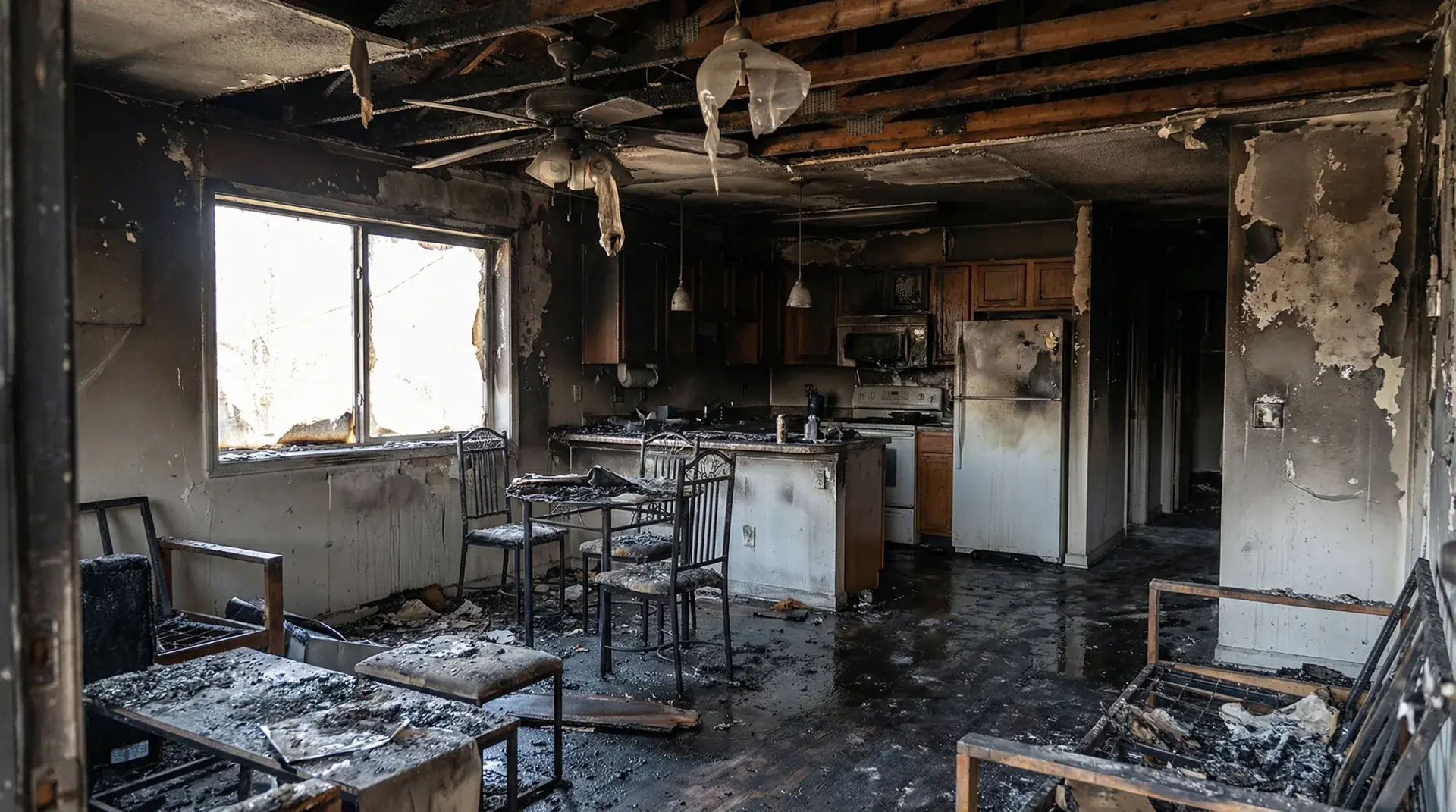
Condo Fire & Smoke Damage Claims: Two Policies, One Expert on Your Side
A fire in your condo unit triggers both the HOA master policy and your HO-6 policy. Navigating both policies simultaneously while dealing with smoke damage, displacement, and restoration is overwhelming. We handle every layer.
Condo Fire Claims Involve Multiple Policies and Multiple Disputes
A fire in a condo unit creates a complex claims situation involving the HOA master policy, your individual HO-6 policy, and potentially the policies of neighboring unit owners who suffered smoke or water damage from the same fire. Each policy has different coverage provisions, deductibles, and exclusions.
Insurance companies frequently exploit this complexity by limiting coverage under each policy, pointing each policy toward the other, or undervaluing smoke and soot damage that affects areas far beyond the fire origin.
We understand how condo fire claims work and how to coordinate coverage across all applicable policies to ensure your full recovery.
Common Damage Types We Document
- Direct Fire Damage to the Unit: Structural damage to walls, floors, ceilings, and fixtures within your unit caused directly by fire.
- Smoke and Soot Contamination: Smoke and soot damage to your unit, personal property, and HVAC system, which often extends far beyond the fire area.
- HOA Master Policy Coverage: Damage to the building structure and common areas covered under the HOA master policy.
- HO-6 Unit Owner Coverage: Your personal property, improvements and betterments, and additional living expenses covered under your HO-6 policy.
- Water Damage from Suppression: Water damage from sprinkler systems and firefighting efforts, which can affect multiple units.
- Additional Living Expenses: Coverage for temporary housing and increased living costs while your unit is being restored.
How Condo Fires Cause Damage
Fires in condo buildings spread through shared walls, HVAC systems, and utility chases, causing smoke and soot damage to units far from the fire origin. Sprinkler systems and firefighting water can damage multiple units simultaneously. Smoke is acidic and corrosive, damaging electronics, fabrics, and finishes throughout the affected area. The full scope of a condo fire loss often extends well beyond the unit where the fire originated, and documenting all affected areas requires systematic inspection of every unit in the affected zone.
- Condo fires frequently cause smoke and soot damage to multiple units beyond the unit of origin.
- Water from sprinkler systems and firefighting can cause damage to units on multiple floors.
- Smoke remediation in a condo building can cost significantly more than the direct fire damage.
- Condo fire claims involving multiple policies and multiple units are among the most complex residential insurance claims.
What You Need to Know
Which Policy Covers What in a Condo Fire
The HOA master policy typically covers the building structure, common areas, and -- depending on the master policy type -- the original fixtures and finishes within your unit. Your HO-6 policy covers your personal property, any improvements you have made to the unit, and additional living expenses. Understanding which policy covers which damage is essential to filing your claim correctly and avoiding coverage gaps. We review both policies and coordinate the claims to ensure complete coverage.
Smoke and Soot: The Hidden Cost of Condo Fires
Smoke and soot contamination is the most frequently undervalued component of a condo fire claim. Soot is acidic and corrosive, damaging electronics, HVAC systems, and finishes throughout the unit -- not just in the area of the fire. Proper remediation requires professional decontamination of every affected surface and system. We document the full extent of smoke and soot contamination and include the cost of proper remediation in your claim.
Additional Living Expenses During Restoration
If your condo unit is uninhabitable due to fire or smoke damage, your HO-6 policy may provide additional living expense (ALE) coverage for temporary housing and increased living costs during the restoration period. We document your ALE losses from the first day of displacement and include them in your claim.
Tips That Protect Your Claim
Document All Damage Before Cleanup
Photograph and video all fire, smoke, and water damage before any cleanup or restoration begins. Document every room, every surface, and every damaged item.
Obtain a Copy of the HOA Master Policy
Request a copy of the HOA master policy from your HOA board or property manager. Understanding what the master policy covers is essential to filing your claim correctly.
File Under Both Policies
Report the loss to both your HO-6 insurer and the HOA. We coordinate both claims to ensure maximum recovery and prevent coverage gaps.
Do Not Accept Smoke Damage Minimization
Insurance adjusters sometimes limit smoke damage claims to the area immediately adjacent to the fire. We document the full extent of smoke and soot contamination throughout the unit.
Track Additional Living Expenses
Keep receipts for all temporary housing, meals, and other additional living expenses from the first day you are displaced from your unit.
Document All Improvements to Your Unit
If you have made improvements to your unit, document them with photographs and receipts. These improvements may not be covered under the master policy and must be claimed under your HO-6.
Critical: Protect Your Claim Before Starting Any Repairs
Do not begin full repairs until your claim is fully settled. Damage is evidence. Altering or removing it before your insurer has properly documented it can eliminate coverage entirely. Insurance companies only pay for what can be proven. Only perform emergency repairs necessary to prevent further damage, and document everything with photos and video before touching anything.
What to Do Right Now
Document all damage with photographs and video immediately.
Obtain a copy of the HOA master policy from your HOA board or property manager.
Report the loss to your HO-6 insurer and to the HOA.
Track all additional living expenses from the first day of displacement.
Document all improvements and betterments you have made to your unit.
Contact DCS PIA before signing any documents or accepting any settlement offers.
Only a Fool Represents Themselves
Condo fire claims involve multiple policies that must be coordinated to avoid coverage gaps.
Smoke and soot contamination is routinely underestimated by insurance adjusters.
The HOA master policy and your HO-6 policy may point toward each other, leaving you caught in the middle.
Improvements and betterments are frequently overlooked in condo fire claims without professional representation.
Early mistakes -- including accepting an insufficient offer or failing to document smoke damage -- can permanently reduce your recovery.
The insurance company has a team of professionals working for them. You deserve one working for you.
Get a Licensed Public Adjuster on Your SideWhy Policyholders Trust DCS PIA
We bring insider knowledge, construction expertise, and genuine care to every claim.
We have documented condo fire and smoke losses across Texas and Florida since 2010.
We understand how HOA master policies and HO-6 policies interact and how to coordinate claims across both.
Our Level 2 Xactimate certified estimators document every line item of your unit damage and contents loss.
We handle the entire claims process from initial documentation through final settlement.
We work on contingency. We only get paid when you do, and our fee is a percentage of the settlement we recover for you.
Frequently Asked Questions
Ready to Get What Your Policy Owes You?
Schedule a free, no-obligation consultation with a licensed public adjuster today. No recovery, no fee. No risk to you.