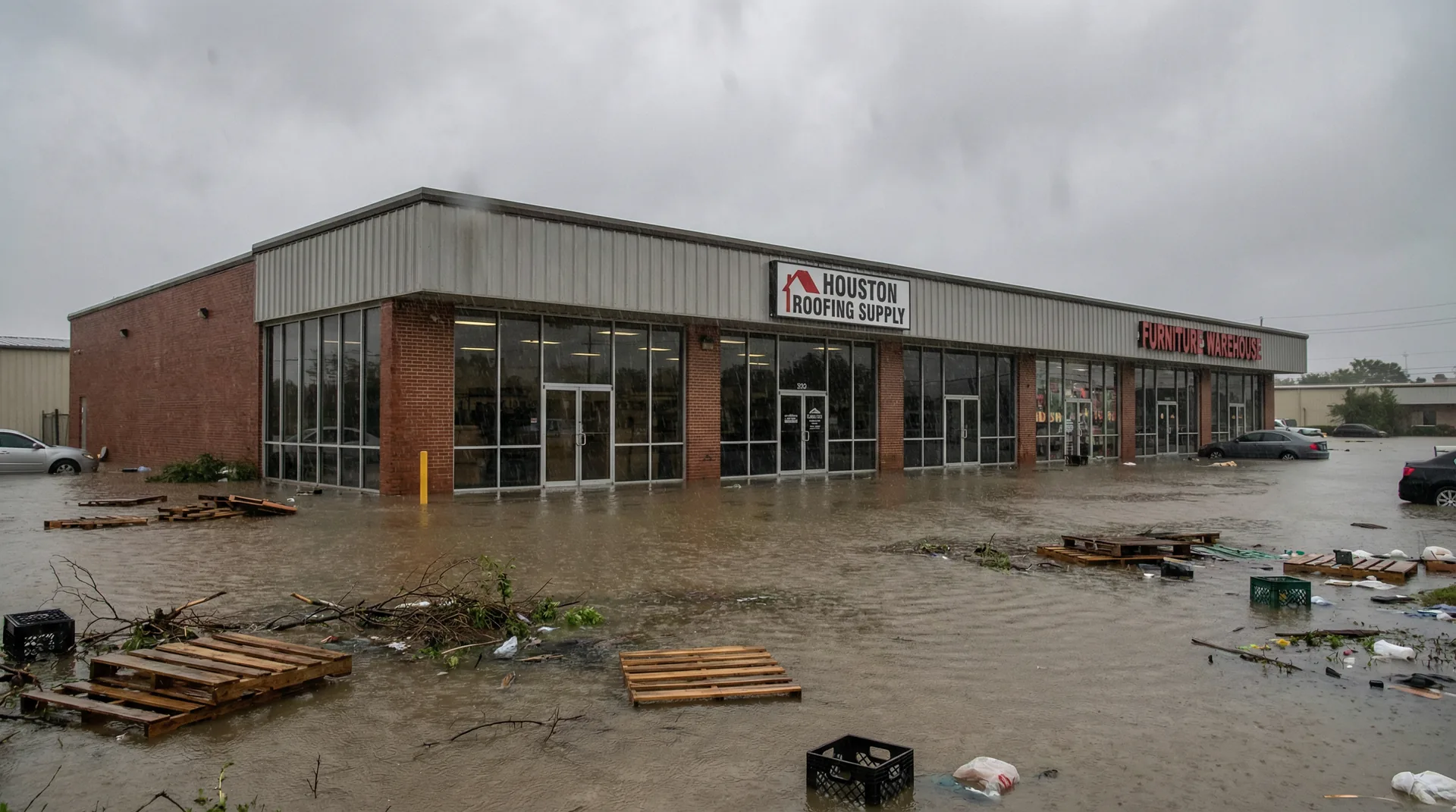
Commercial Flood Claims: Navigate the Process, Protect Your Business
Commercial flood claims through the NFIP or private flood insurance have strict deadlines and complex requirements. We handle every detail so your business recovery is complete.
Commercial Flood Claims Have Unique Rules and Strict Deadlines
Commercial flood insurance claims, whether through the National Flood Insurance Program or a private insurer, operate under different rules than standard commercial property claims. The documentation requirements, deadlines, and coverage limitations are distinct and complex.
Missing a deadline or failing to document your loss correctly can result in a reduced settlement or a denial. We know the NFIP process and private flood policy requirements for commercial properties and help you navigate every step correctly.
We also document business interruption losses and help you pursue all available coverage from both your flood policy and your commercial property policy.
Common Damage Types We Document
- Structural Flood Damage: Foundation damage, compromised walls and framing, damaged mechanical systems, and structural elements affected by rising water.
- Equipment and Inventory: Damage to business equipment, machinery, inventory, and business personal property caused by floodwater.
- Contamination: Floodwater often carries sewage, chemicals, and other contaminants that require professional remediation.
- Business Interruption: Lost revenue and continuing expenses during the period your business operations are suspended due to flood damage.
What You Need to Know
NFIP Commercial Coverage Limits
The NFIP provides up to $500,000 in coverage for commercial building damage and up to $500,000 for business personal property. Private flood insurance may offer higher limits and broader coverage. We work with both types of policies and know the differences in how claims are handled.
Business Interruption and NFIP
Standard NFIP policies do not include business interruption coverage. Business interruption coverage for flood events must come from your commercial property policy or a separate business interruption policy. We help you identify and pursue all available coverage from every applicable policy.
The 60-Day Proof of Loss Deadline
NFIP policies require a signed Proof of Loss to be submitted within 60 days of the date of loss. This is a strict contractual requirement for commercial as well as residential policies. Missing this deadline can result in a denial of your entire claim.
Tips That Protect Your Claim
Do Not Enter Until Safe
Do not re-enter a flood-damaged commercial property until it has been declared safe. Floodwater can contain sewage, chemicals, and electrical hazards.
Document Before Any Cleanup
Take extensive photos and videos of all flood damage before any cleanup or drying begins. Photograph the waterline, all damaged equipment, all damaged inventory, and every affected area.
File Your Proof of Loss on Time
NFIP policies require a signed Proof of Loss within 60 days of the loss. This is a strict deadline. Missing it can jeopardize your entire claim. We help you prepare and submit this document correctly and on time.
Begin Tracking Business Interruption
From the moment your operations are affected, begin tracking lost revenue and all continuing expenses. Note that standard NFIP policies do not include business interruption coverage, but your commercial property policy may.
Document All Damaged Inventory
Create a detailed inventory of all damaged or destroyed inventory, including the quantity, description, and value of each item.
Separate Flood Damage from Wind Damage
If your loss involved both wind and flooding, the damages must be carefully separated. Wind damage is covered under your commercial property policy; flood damage is covered under your flood policy.
Critical: Protect Your Claim Before Starting Any Repairs
Do not begin full repairs until your claim is fully settled. Damage is evidence. Altering or removing it before your insurer has properly documented it can eliminate coverage entirely. Insurance companies only pay for what can be proven. Only perform emergency repairs necessary to prevent further damage, and document everything with photos and video before touching anything.
Why Policyholders Trust DCS PIA
We bring insider knowledge, construction expertise, and genuine care to every claim.
We know the NFIP process and private flood policy requirements for commercial properties.
We help you meet every deadline, including the critical 60-day Proof of Loss requirement.
We separate flood damage from wind damage to maximize recovery from both policies.
We identify and pursue business interruption coverage from all applicable policies.
We are fully licensed and bonded in Texas and Florida.
No recovery, no fee. You pay us nothing unless we help you recover money.
We handle every step from inspection to final settlement.
We help you understand and fulfill every obligation under your policy.
Frequently Asked Questions
Ready to Get What Your Policy Owes You?
Schedule a free, no-obligation consultation with a licensed public adjuster today. No recovery, no fee. No risk to you.