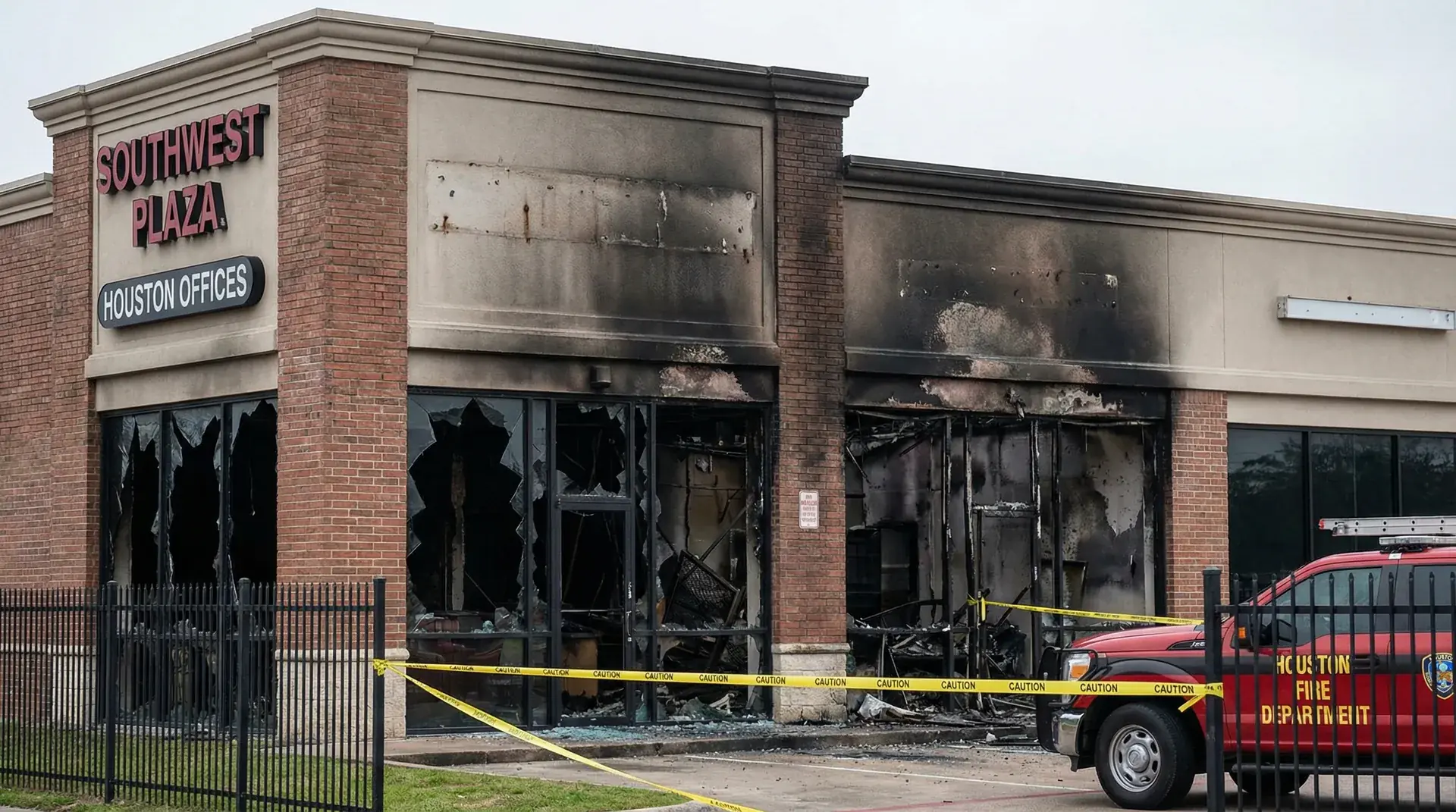
Commercial Fire & Smoke Damage Claims: Recover Every Dollar Your Business Is Owed
A commercial fire triggers multiple simultaneous coverages. We document every layer -- structural damage, smoke contamination, contents, business interruption, and extra expense -- so your recovery is complete.
Commercial Fire Claims Involve Multiple Layers of Loss
A fire at your commercial property triggers multiple simultaneous claims: structural and building damage, business personal property and inventory, business interruption losses, smoke and soot contamination, and the cost of debris removal and decontamination. Each category requires separate documentation and accounting.
Insurance companies frequently undervalue commercial fire claims by limiting the scope of smoke damage, disputing the period of business interruption, or applying depreciation to equipment and inventory that should be covered at replacement cost.
We document every aspect of your commercial fire loss and present a complete, well-supported claim that reflects the true cost of your recovery.
Common Damage Types We Document
- Structural Fire Damage: Damage to the building structure, roof, walls, floors, electrical systems, HVAC, and plumbing caused directly by fire.
- Smoke and Soot Contamination: Smoke and soot penetrate every surface and system in a building. Proper decontamination is often more expensive than the fire damage itself.
- Business Personal Property: Damage to equipment, inventory, furniture, fixtures, and all business personal property including items that appear undamaged but are contaminated.
- Business Interruption: Lost revenue and continuing expenses during the period your business operations are suspended due to covered fire damage.
- Extra Expense Coverage: Additional costs incurred to resume operations, including temporary facilities, equipment rentals, and expedited repairs.
- Debris Removal: The cost of removing fire debris, contaminated materials, and hazardous waste from your property, which is often a covered expense under your policy.
Understanding Commercial Fire Damage
Commercial fires cause damage in four distinct phases: direct flame contact, radiant heat, smoke and soot deposition, and water damage from suppression efforts. Smoke travels through HVAC systems and contaminates areas far from the fire origin. Soot is acidic and continues to corrode metal and electronics for weeks after the fire is extinguished. Water from sprinkler systems and fire suppression can cause secondary damage to inventory, equipment, and structural components. A complete commercial fire claim must account for all four phases of damage.
- Commercial fires cause an estimated $3.3 billion in direct property damage annually in the United States.
- Smoke damage often accounts for 50 to 70 percent of the total loss in a commercial fire claim.
- Business interruption losses frequently exceed the direct property damage in commercial fire claims.
- The average commercial fire claim takes 12 to 18 months to fully resolve without professional representation.
What You Need to Know
Smoke and Soot: The Hidden Cost of Commercial Fires
Smoke and soot contamination is the most frequently undervalued component of a commercial fire claim. Soot is acidic and corrosive, damaging electronics, HVAC systems, and finishes throughout the building -- not just in the area of the fire. Proper remediation requires professional decontamination of every affected surface and system. We document the full extent of smoke and soot contamination and include the cost of proper remediation in your claim.
Business Interruption: Calculating Your True Loss
Business interruption coverage replaces lost net income and pays continuing expenses during the period your business is unable to operate due to covered property damage. The calculation requires detailed financial analysis using your historical revenue, projected revenue, and all continuing fixed expenses. Insurance companies frequently dispute the length of the covered period and the amount of lost income. We present your business interruption claim with the financial documentation it requires.
Replacement Cost vs. Actual Cash Value for Commercial Property
Most commercial property policies cover building and contents at replacement cost, but many contain provisions that allow the insurer to initially pay actual cash value (ACV) and withhold the depreciation until repairs are completed. Understanding how your policy handles depreciation recovery is critical to maximizing your settlement. We review your policy and ensure you recover the full replacement cost you are entitled to.
Ordinance or Law Coverage
When a commercial building is damaged by fire, local building codes may require upgrades to the undamaged portions of the structure as a condition of rebuilding. Standard commercial property policies do not cover the cost of these code-required upgrades unless you have Ordinance or Law coverage. We identify whether your policy includes this coverage and document all applicable code upgrade costs.
Tips That Protect Your Claim
Document Everything Before Cleanup
Photograph and video every area of fire, smoke, and water damage before any cleanup, demolition, or restoration work begins. This documentation is the foundation of your claim.
Secure the Property and Prevent Further Damage
Board up openings and protect the property from weather and vandalism. Your policy requires you to mitigate further loss. Keep all receipts for emergency protective measures.
Begin Tracking Business Interruption Immediately
From the day of the fire, track every dollar of lost revenue and every continuing expense. Business interruption coverage is time-sensitive and requires detailed documentation from day one.
Preserve All Financial Records
Gather tax returns, profit and loss statements, payroll records, and sales data for the 12 to 24 months before the loss. These records establish your baseline revenue for the business interruption calculation.
Do Not Accept the First Settlement Offer
Insurance companies frequently make initial settlement offers that do not account for the full scope of smoke damage, business interruption losses, or extra expense coverage. Do not accept any offer before speaking with us.
Track All Extra Expenses
Keep receipts for every additional cost incurred to resume or maintain operations, including temporary facilities, equipment rentals, and expedited shipping. These extra expenses are often covered under your policy.
Critical: Protect Your Claim Before Starting Any Repairs
Do not begin full repairs until your claim is fully settled. Damage is evidence. Altering or removing it before your insurer has properly documented it can eliminate coverage entirely. Insurance companies only pay for what can be proven. Only perform emergency repairs necessary to prevent further damage, and document everything with photos and video before touching anything.
What to Do Right Now
Contact your insurance carrier to report the loss and obtain a claim number.
Secure the property and implement emergency protective measures to prevent further damage.
Document all damage with photographs and video before any cleanup begins.
Begin tracking all business interruption losses from the date of the fire.
Gather financial records for the 12 to 24 months prior to the loss.
Contact DCS PIA before signing any documents or accepting any settlement offers.
Only a Fool Represents Themselves
Commercial fire claims involve multiple simultaneous coverages that must be documented and presented separately.
Smoke and soot contamination is routinely underestimated by insurance adjusters who are not trained in commercial remediation.
Business interruption calculations require forensic accounting expertise that most policyholders do not have.
Insurance companies assign experienced commercial claims adjusters to large fire losses. You deserve experienced representation on your side.
Early mistakes in the claims process -- including premature cleanup, failure to document damage, or accepting an initial offer -- can permanently reduce your recovery.
The insurance company has a team of professionals working for them. You deserve one working for you.
Get a Licensed Public Adjuster on Your SideWhy Policyholders Trust DCS PIA
We bring insider knowledge, construction expertise, and genuine care to every claim.
We have documented commercial fire and smoke losses across Texas and Florida since 2010.
Our team includes Level 2 Xactimate certified estimators who can document every line item of your structural and contents loss.
We handle the entire claims process from initial documentation through final settlement, so you can focus on your business recovery.
We work on contingency. We only get paid when you do, and our fee is a percentage of the settlement we recover for you.
We have experience with all major commercial property insurers and understand how they evaluate and dispute commercial fire claims.
Frequently Asked Questions
Ready to Get What Your Policy Owes You?
Schedule a free, no-obligation consultation with a licensed public adjuster today. No recovery, no fee. No risk to you.