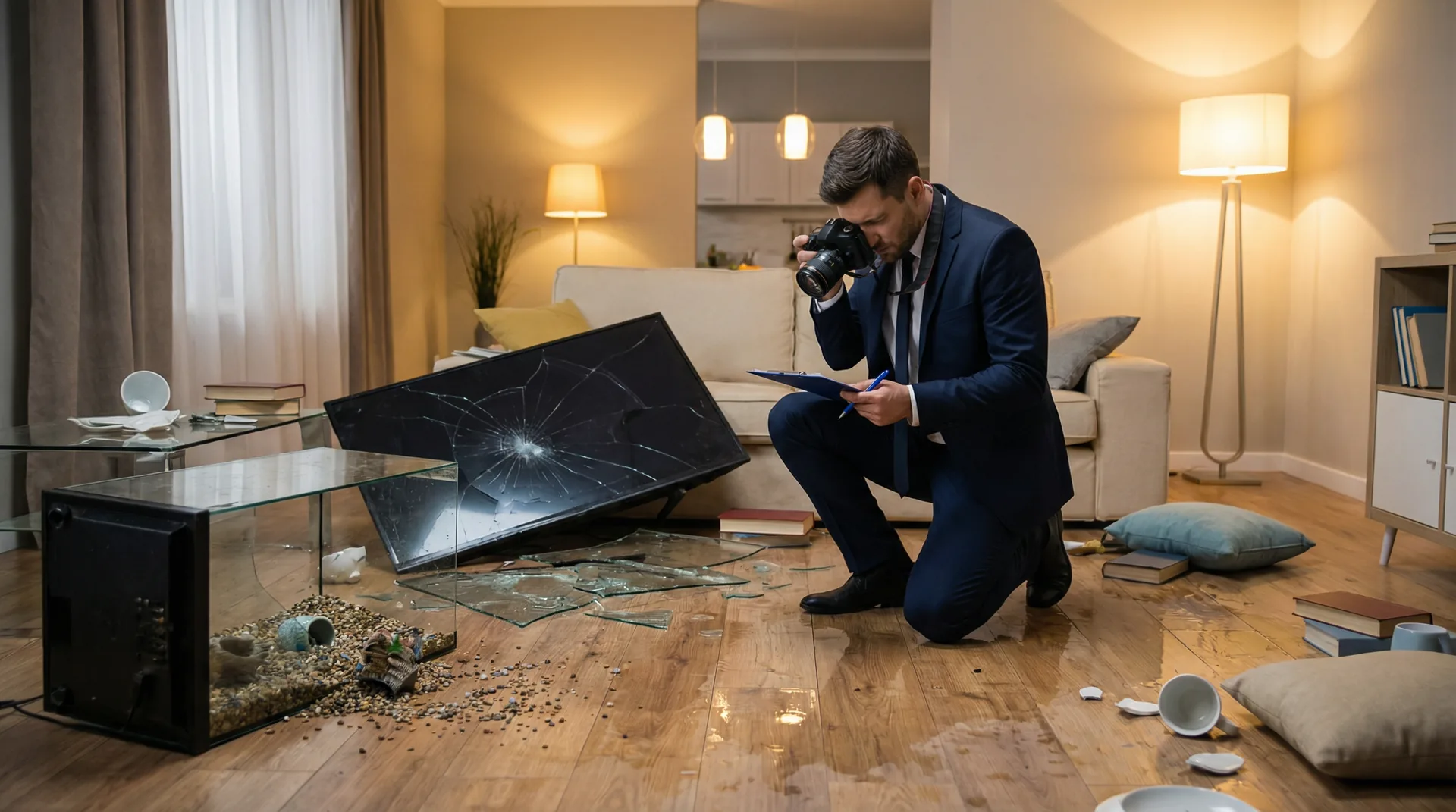
Accidental Damage Claims That Establish the Cause and the Full Cost
Sudden, accidental damage to your home is covered. We document the cause and every affected component to ensure you are made whole.
Accidental Damage Is Covered. Proving It Was Accidental Is Where the Work Begins.
Accidental damage coverage protects against sudden, unexpected damage to your property that is not caused by a covered named peril but results from an unintended event. Examples include a vehicle striking your home, a tree falling on your roof, a child breaking a window, or a contractor accidentally damaging a structural component.
The key to an accidental damage claim is establishing that the damage was sudden, accidental, and not the result of wear and tear, neglect, or intentional acts. We document the cause and circumstances of the damage and build the evidentiary record that supports your claim.
Common Damage Types We Document
- Vehicle Impact: Damage from a vehicle striking your home, fence, or other structures
- Falling Objects: Damage from trees, branches, or other objects falling on your home
- Contractor Damage: Accidental damage caused by contractors working on your property
- Sudden Structural Damage: Unexpected structural failures not caused by a named peril
- Accidental Breakage: Sudden, accidental breakage of fixtures, glass, and built-in components
- Impact Damage: Damage from sudden impacts including sports equipment, falling items, and similar events
Understanding Accidental Damage Coverage: What Is Covered and What Is Not
Accidental damage coverage varies significantly by policy. Understanding what your policy covers and what it excludes is essential to knowing whether you have a viable claim.
Most standard homeowner policies (HO-3 and HO-5 forms) provide open perils coverage for the dwelling, meaning all causes of loss are covered except those specifically excluded. Accidental damage that does not fall within an exclusion is therefore covered under an open perils policy. Named perils policies (HO-1 and HO-2 forms) only cover the specific events listed in the policy.
Falling objects is a named peril in most standard homeowner policies. This covers damage from trees, branches, and other objects that fall on the home. The falling object must come from outside the home. Damage caused by an object that falls within the home, such as a ceiling fan that falls and damages the floor, may or may not be covered depending on the policy.
Vehicle impact is a named peril in most standard homeowner policies. If a vehicle strikes your home, fence, or other covered structure, the damage is covered regardless of whether the vehicle was operated by you, a family member, or a third party. The vehicle does not have to be a motor vehicle. A lawnmower, golf cart, or other motorized vehicle qualifies.
Common ways accidental damage claims are minimized include arguing that the damage was caused by wear and tear rather than an accidental event, applying exclusions that do not actually apply to the specific loss, limiting the scope to only the most visibly damaged area, and disputing the cause of the damage. We document the cause and circumstances of the damage and challenge improper exclusion applications.
What You Need to Know
Open Perils vs. Named Perils Coverage
The type of policy you have determines whether accidental damage is covered. Open perils policies cover all causes except those specifically excluded. Named perils policies only cover the events listed. We review your policy to determine your coverage and identify the best path to recovery.
Third-Party Liability for Accidental Damage
If the accidental damage was caused by a third party, such as a contractor or a neighbor, the responsible party may be liable for the damage. Your homeowner policy may provide coverage while you pursue the third party for reimbursement. We help you understand your options and maximize your recovery.
Documenting the Cause of Accidental Damage
Establishing that the damage was caused by an accidental event requires documentation of the event itself. This may include photos, witness statements, police reports, contractor records, and other evidence. We help you gather and present this documentation effectively.
Tips That Protect Your Claim
Document the Event and the Damage Immediately
Photograph the cause of the damage (the fallen tree, the vehicle impact point, etc.) and all resulting damage before any cleanup or repairs begin.
Gather Witness Information
If there were witnesses to the accidental event, get their names and contact information.
File a Police Report If Applicable
If the damage was caused by a vehicle or another person, file a police report.
Make Temporary Repairs to Prevent Further Damage
Cover openings and secure the structure to prevent further damage. Document all temporary repairs.
Report Promptly
Report the claim to your insurer as soon as possible after the accidental event.
Contact DCS PIA Before the Adjuster Arrives
We will document the cause and the full extent of damage to ensure your claim is complete.
How to Reduce Your Risk
Install barriers such as bollards or concrete curbs to protect your home from vehicle impact.
Have trees near your home inspected regularly by a certified arborist and remove dead or damaged trees.
Ensure contractors working on your property are licensed and carry adequate liability insurance.
Review your insurance policy to understand your accidental damage coverage and any applicable exclusions.
Keep a home inventory with photos and documentation of all major fixtures and built-in components.
Install security cameras to document any accidental events that occur on your property.
Critical: Protect Your Claim Before Starting Any Repairs
Do not begin full repairs until your claim is fully settled. Damage is evidence. Altering or removing it before your insurer has properly documented it can eliminate coverage entirely. Insurance companies only pay for what can be proven. Only perform emergency repairs necessary to prevent further damage, and document everything with photos and video before touching anything.
What to Do Right Now
Document the Event and the Damage
Photograph the cause and all resulting damage before any cleanup or repairs.
Gather Witness Information
Get names and contact information for any witnesses.
File a Police Report If Applicable
File a police report if the damage was caused by a vehicle or another person.
Make Temporary Repairs
Secure the structure and cover openings to prevent further damage. Document all temporary repairs.
Report the Claim to Your Insurer
Notify your insurance company promptly.
Contact DCS PIA Before the Adjuster Arrives
We will document the cause and the full extent of damage.
Only a Fool Represents Themselves
Accidental damage claims require clear documentation of the cause and circumstances of the damage. Without professional representation, policyholders frequently miss components of the damage, accept inadequate settlements, or have claims denied on the basis of exclusions that do not actually apply.
We document the cause and circumstances of the damage to establish coverage.
We identify all applicable coverage including open perils coverage and third-party liability.
We ensure the full scope of damage is documented and included in the claim.
We work on contingency. No recovery means no fee.
We challenge improper exclusion applications with documentation and policy expertise.
The insurance company has a team of professionals working for them. You deserve one working for you.
Get a Licensed Public Adjuster on Your SideWhy Policyholders Trust DCS PIA
We bring insider knowledge, construction expertise, and genuine care to every claim.
We document the cause and circumstances of accidental damage to establish coverage.
We identify all applicable coverage and third-party liability options.
We work on contingency. No recovery means no fee.
We ensure the full scope of damage is documented and included in the claim.
We have handled accidental damage claims across Texas and Florida.
Frequently Asked Questions
Related Claim Types
Ready to Get What Your Policy Owes You?
Schedule a free, no-obligation consultation with a licensed public adjuster today. No recovery, no fee. No risk to you.